
 Dr. Ahmed Farhan
Medical Disclaimer: This article is for educational and informational purposes only and does not constitute individual medical advice, diagnosis, or clinical treatment. Always consult your personal physician or qualified healthcare provider regarding medical conditions, prescription changes, or new health regimens.
Transparency Disclosure: Dibesity features independent, evidence-based medical research. Some articles may contain vetted affiliate links to metabolic wellness products; if you make a purchase, we may earn a modest commission at no extra cost to you.
Can you prevent obesity and type 2 diabetes, sometimes called “diabesity”? For many people the answer is that you can lower your risk and delay onset, though no approach guarantees prevention.
Sustained changes in eating, physical activity, sleep and weight are the foundation. Some people, especially those with prediabetes, established obesity or a strong family history, may also need medical treatment. A clinician should assess this individually.
What Is Diabesity?
Diabesity is a descriptive, non-diagnostic term for obesity and type 2 diabetes occurring together. It is not a separate formal disease.
The two conditions share risk factors and often worsen each other. Hypertension and abnormal cholesterol frequently coexist, and the cluster overlaps with metabolic syndrome, though the terms are not interchangeable.
Obesity is usually defined by a body mass index (BMI) of 30 kg/m² or higher. The older “20% above ideal weight” definition is no longer the standard.
BMI is a screening tool and does not capture fat distribution, so waist measurement and other clinical assessment also matter. See also the types and grades of obesity.
Obesity and type 2 diabetes are both rising worldwide, in high-income and lower-income countries.
Why Excess Weight Raises Diabetes Risk
Excess body fat, especially around the abdomen, is associated with insulin resistance. In insulin resistance, tissues respond less well to insulin, so the pancreas must produce more.
Over time, insulin-producing cells may be unable to keep up and blood glucose rises. Low-grade inflammation in fat tissue and reduced physical activity are commonly proposed contributors. These mechanisms are complex and only partly understood.
Other factors that raise risk include family history, older age, certain ethnic backgrounds, gestational diabetes, poor sleep, and some medicines. Obesity also raises the risk of heart disease, hypertension and stroke.
Understanding the Diagnosis
Diabetes must be diagnosed and classified by a clinician. The older terms “insulin-dependent” and “insulin-resistant” (IDDM and NIDDM) are outdated and conflate treatment with disease type.
Current practice distinguishes type 1 diabetes, which involves autoimmune loss of insulin production, from type 2 diabetes, which involves insulin resistance with inadequate insulin secretion. Type 2 is not only an “adult-onset” disease.
The criteria below are commonly used in clinical guidelines such as those of the American Diabetes Association.
| Test | Prediabetes range | Diabetes range |
|---|---|---|
| Fasting plasma glucose | 100–125 mg/dL | 126 mg/dL or higher |
| 2-hour glucose during a 75 g oral glucose tolerance test | 140–199 mg/dL | 200 mg/dL or higher |
| HbA1c | 5.7–6.4% | 6.5% (48 mmol/mol) or higher |
The 2-hour value comes from a formal oral glucose tolerance test, not from an ordinary post-meal reading.
Prevention, Control, Remission and Cure: Key Differences
- Prevention means lowering the chance that obesity or diabetes develops. It reduces or delays risk but does not eliminate it.
- Control means keeping glucose, weight, and blood pressure in target ranges while treatment continues.
- Remission means glucose levels return below the diabetes range for a defined period, usually without glucose-lowering medicines. It is not a cure, because diabetes can return, particularly with weight regain.
- A cure is not an established outcome for type 2 diabetes.
Diet: What Is Reasonable to Recommend
The best-supported dietary goal is a sustainable pattern that helps you reach and keep a healthier weight. Calorie balance matters, and so does food quality. General principles that clinicians commonly discuss include:
- Emphasizing vegetables, whole fruits, legumes, whole grains, nuts, and lean protein sources.
- Limiting sugary drinks, refined carbohydrates, and ultra-processed foods.
- Choosing high-fiber foods, which may help with fullness.
- Paying attention to portion sizes and eating patterns you can maintain long term.
Physical Activity
What the Supplied Research Adds
Weight regain can undo benefits
In a randomized trial of 221 sedentary women with overweight, a structured 800 kcal/day diet lowered average BMI from 28.3 to 23.9 kg/m².
BMI regained to 25.8 at one year. Predicted 10-year cardiovascular and type 2 diabetes risks fell with weight loss and then partly rebounded.
The group that added resistance exercise kept a significant net reduction in predicted diabetes risk at one year, and continued exercise adherence was linked to less rebound (PMID 42634098).
These were calculated risk estimates, not actual diagnoses. The participants were women with overweight, and the diet was very low in calories, so results may not apply to everyone. The message is that maintenance matters as much as initial weight loss.
Digital prevention programs
A secondary analysis of 151 adults with prediabetes and overweight or obesity used a fully automated, app-based prevention program.
Higher app engagement was associated with greater odds of achieving at least 5% weight loss (odds ratio 3.31, 95% CI 1.16–9.42) (PMID 42685343).
This was a post hoc analysis. It shows association only and does not prove that engagement causes better results, since more motivated people may simply use apps more.
Lifestyle effects may differ by body size
A long-term follow-up of the Action for Health in Diabetes trial examined cognitive impairment in adults with type 2 diabetes and overweight or obesity.
The effect of intensive lifestyle intervention varied by baseline BMI. Risk was lower in people with overweight (hazard ratio 0.64), similar in those with BMI 30–39 kg/m² (0.98), and higher in those with BMI of 40 kg/m² or above (1.40) (PMID 42427170).
This study concerned cognitive outcomes, not diabetes prevention, and the subgroup findings should be viewed cautiously. It does show that lifestyle effects are not uniform across people.
Medicines: Weight Effects and Safety
People who already have type 2 diabetes and obesity benefit from choosing medicines with their weight effects in mind.
Sulfonylureas, insulin and pioglitazones commonly promote weight gain. The original article wrongly listed gliptins (DPP-4 inhibitors) among them.
These are generally weight-neutral. See our overview of diabetes medicines that cause weight gain. Never stop or change prescribed medicines without medical advice.
| Medicine class | General weight effect | Examples of key precautions |
|---|---|---|
| Metformin | Generally weight-neutral or modest loss | Gastrointestinal effects; kidney function must be considered |
| SGLT2 inhibitors (empagliflozin, dapagliflozin) | Modest weight loss | Genital infections, dehydration, rare ketoacidosis |
| GLP-1 receptor agonists (liraglutide, dulaglutide, semaglutide) | Weight loss; varies by agent and dose | Nausea, vomiting, diarrhea; specific contraindications apply |
| Sulfonylureas, pioglitazone, insulin | Often weight gain | Hypoglycemia (sulfonylureas, insulin); fluid retention (pioglitazone) |
This table is general background and not a treatment recommendation. Choice of medicine depends on kidney, heart and liver status, other conditions, cost and patient preference.
Newer incretin-based therapies
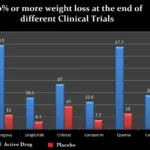
A systematic review of 11 studies compared tirzepatide with semaglutide for obesity. In the one randomized open-label trial, mean weight change at 72 weeks was −20.2% with tirzepatide versus −13.7% with semaglutide.
In 10 retrospective real-world cohorts, adjusted differences favoring tirzepatide were about 2.3 to 4.4 percentage points, smaller than in the trial.
Gastrointestinal events predominated with both drugs, and long-term head-to-head cardiovascular data are absent (PMID 42732434).
Four of the cohorts were at serious risk of bias from unadjusted confounding. Learn more about tirzepatide and Wegovy (semaglutide 2.4 mg).
A meta-analysis of 10 randomized trials of oral small-molecule GLP-1 receptor agonists found reductions in body weight and HbA1c (mean difference −0.94).
It also found more gastrointestinal adverse events, though serious adverse events were not significantly increased (PMID 42483679).
Safety points for GLP-1-based medicines: common side effects include nausea, vomiting, diarrhea, and constipation. Prescribers typically screen for contraindications and cautions, such as a personal or family history of medullary thyroid carcinoma or MEN2, a history of pancreatitis, and pregnancy or planned pregnancy.
Treatment should be supervised by a physician, and these drugs are not a substitute for lifestyle measures. Weight often returns after stopping, so long-term planning matters.
Bariatric (Metabolic) Surgery
Surgery can lead to substantial weight loss and diabetes remission in selected people with obesity. Candidacy depends on BMI, related conditions, and a specialist assessment. All operations carry risks, require lifelong follow-up, and are not suitable for everyone.
A systematic review of 5-year outcomes after one-anastomosis gastric bypass (seven studies, 5,524 patients at baseline, 3,735 with complete follow-up) reported mean total weight loss of 33.2%.
It reported type 2 diabetes remission of 77.4%, with no procedure-related mortality observed. Complications included marginal ulcers, reflux, anemia, and low albumin.
The authors described the evidence as limited, heterogeneous, and sometimes conflicting, and could not establish superiority over other procedures (PMID 42431778).
Remission is not cure, and these figures describe only one procedure in adults with BMI of 35 kg/m² or higher.
Common options include sleeve gastrectomy, Roux-en-Y gastric bypass, adjustable gastric band, and biliopancreatic diversion with duodenal switch, among others.
Not all procedures remove or resect stomach or intestine. The adjustable gastric band, for example, constricts the stomach without resection. Read about complications of bariatric surgery before deciding.
Practical Prevention Checklist
- Ask your doctor about screening for prediabetes or diabetes if you are overweight, have a family history, hypertension, or other risk factors.
- Work toward gradual, sustainable weight loss if you have excess weight. Studies of prevention programs commonly use a goal of at least 5%.
- Aim for regular moderate activity plus muscle-strengthening exercise.
- Prioritize minimally processed foods and reduce sugary drinks.
- Protect sleep and address stress, and review medicines that may promote weight gain with your doctor.
- Plan for weight maintenance, since regained weight can reverse gains.
Frequently Asked Questions
Can diabetes be completely prevented in people with obesity?
Not reliably. Risk can be reduced or delayed, but it cannot be eliminated. Genetics and other factors also play a role.
Is lifestyle change enough?
For some people it may be. Others, particularly those with prediabetes, established diabetes or severe obesity, may need medicines or surgery. Treatment should be individualized.
Is diabetes remission the same as cure?
No. Remission means glucose levels are below the diabetes range for a period. Diabetes can return, so regular monitoring is still needed.
Do weight-loss injections replace healthy habits?
No. They are used alongside nutrition and activity changes. They have side effects, require medical supervision, and weight may return after stopping.
Conclusion
Preventing obesity and type 2 diabetes relies on sustainable eating and activity habits, attention to weight maintenance and appropriate medical care.
The supplied research highlights that weight regain can erode benefits, that engagement with prevention programs is associated with better outcomes, and that newer medicines and surgery can be effective but carry limits and risks.
Much of this evidence is observational, short-term or from narrow populations. Anyone concerned about their risk should seek individualized advice from a qualified clinician.
References
- Mohamed Abdalla SA, et al. Comparative Efficacy and Safety of Tirzepatide Versus Semaglutide for Obesity: A Systematic Review. Cureus. 2026;18(8):e114454. https://pubmed.ncbi.nlm.nih.gov/42732434/
- Lalani B, et al. User Engagement and Feature Preferences in an AI-Powered mHealth Intervention for Diabetes Prevention: Secondary Analysis of a Randomized Controlled Trial. JMIR Mhealth Uhealth. 2026;14:e92981. https://pubmed.ncbi.nlm.nih.gov/42685343/
- Elshakankiry AM, et al. Weight Loss Improves Predicted 10-Year MACE and Type 2 Diabetes Risk, but Benefits Partially Rebound at 1 Year. Obesity (Silver Spring). 2026;34(10):1869-1879. https://pubmed.ncbi.nlm.nih.gov/42634098/
- Li L, et al. Investigation into the efficacy and safety profile of oral small-molecule GLP-1 receptor agonists in type 2 diabetes and obesity: a systematic review and meta-analysis. Front Endocrinol (Lausanne). 2026;17:1854779. https://pubmed.ncbi.nlm.nih.gov/42483679/
- Sanchez-Cordero S, et al. Systematic review of five-year outcomes after one-anastomosis gastric bypass. Surg Obes Relat Dis. 2026;22(11):1322-1329. https://pubmed.ncbi.nlm.nih.gov/42431778/
- Espeland MA, et al. Does lifestyle intervention lower clinically significant cognitive impairment risk? Alzheimers Dement. 2026;22(7):e71668. https://pubmed.ncbi.nlm.nih.gov/42427170/
Recommended Metabolic Health & Wellness Products
A curated index of metabolic support compounds, prebiotic fibres, functional botanicals, and zero-sugar pantry staples selected for ingredient quality and scientific relevance.
Transparency Notice: As an Amazon Associate, Dibesity.com earns from qualifying purchases made through external affiliate links, at no extra cost to you.
Targeted Metabolic & Cellular Support
Apigenin Powder
A bioflavonoid compound explored for cellular protection, circadian rhythm support, and metabolic balance.
View on Amazon →97% Pure Berberine Powder (100 g)
High-purity berberine HCl powder for customizable serving sizes and metabolic pathway support.
View on Amazon →Berberine Powder (200 g)
Bulk berberine powder formulation. Check the listing for ingredient details, certificates of analysis, and reviews.
View on Amazon →Pure Inositol Powder
Pure Myo-Inositol and D-Chiro-Inositol powder formulation for metabolic and reproductive wellness. Check the listing for details.
View on Amazon →Functional Botanicals & Prebiotic Fibres
Psyllium Husk with Fennel & Cardamom
A soluble prebiotic fibre blend with warming digestive spices to support gut motility and postprandial glucose moderation.
View on Amazon →100% Pure Hibiscus Powder
Anthocyanin-rich botanical powder supporting cardiometabolic markers, nitric oxide pathways, and vascular health.
View on Amazon →Roasted Barley Powder
A roasted whole-grain grain alternative suitable for nutritious, caffeine-free herbal teas and warm beverages.
View on Amazon →Allulose Confectionery (Low-Glycaemic)
Strawberry Allulose Gummies
Low-calorie, rare-sugar allulose gummies designed to satisfy sweet cravings without causing glycemic spikes.
View on Amazon →Watermelon Allulose Gummies
Refreshing watermelon flavour sweetened with keto-compatible allulose. Minimal net impact on blood sugar.
View on Amazon →Mixed Berry Allulose Gummies
Berry-flavoured chewable treats sweetened with rare sugar allulose for a clean, tooth-friendly profile.
View on Amazon →