

 Dr. Ahmed
Type 1 Diabetes, sometimes called juvenile diabetes or insulin-dependent diabetes, is a chronic illness. It primarily affects children and young adults. However, no age is immune to it.
Unlike Diabetes Type 2, where patients have insulin resistance, these patients have absolute or relative insulin deficiency.
The pancreas produces little to no insulin in this situation. The hormone insulin is used by the body to let glucose (sugar) into cells, which may be used to make energy.
Type 1 diabetes may be brought on by several elements, including viruses and genetics. Despite often developing in infancy or adolescence, type 1 diabetes can sometimes strike adults.
Type 1 diabetes still has no cure, despite much research. The goal of treatment is to control blood sugar levels with the use of insulin, food, and lifestyle changes in order to avoid problems.
Although Teplizumab, a novel drug, is being tested to prevent the occurrence of Type 1 Diabetes in high-risk individuals. This could be just the beginning of a new era of medications that may be used to prevent diabetes.
Signs and Symptoms of Type 1 Diabetes (Insulin Dependent Diabetes)?
Your body will be attempting to remove the glucose from your system through your kidneys before you are officially diagnosed with type 1.
That causes you to often urinate, which is one of the primary signs of diabetes. Other warning indicators to watch out for include feeling thirsty, frequently using the restroom, and spontaneously losing weight.
The signs and symptoms frequently appear suddenly, in only a few days or weeks. Children are especially susceptible to this. Therefore, if you experience any of the symptoms, you should seek medical attention as soon as possible.
How Serious is Type 1 Diabetes (Insulin Dependent Diabetes)?
Currently, 1.45 million Americans are suffering from T1DM. [Ref]
It’s a severe condition that lasts a lifetime. Your heart, eyes, feet, and kidneys might become damaged over time by high blood sugar levels. We refer to this as diabetic complications.
But if you receive the proper care and therapy, you may avoid a lot of these chronic issues. This can assist you in controlling your cholesterol, blood pressure, and blood sugar levels.
Possible Risk Factors of Type 1 Diabetes:
Family background.
A person’s chance of getting type 1 diabetes is marginally increased if they have a parent or sibling who has the disease.
Geography.
The prevalence of type 1 diabetes tends to increase as you go farther from the equator.
Genetics.
Type 1 diabetes is more likely to occur in those who have specific genes.
Age.
Although type 1 diabetes can manifest at any age, it does so at two distinct peaks. Between the ages of 4 and 7, youngsters reach their first peak. The second affects kids between the ages of 10 and 14.
Is it Possible to Reverse T1DM?
Although controlling type 1 diabetes might be difficult, you have our support. Making lifestyle adjustments can have an impact on how you feel, including exercising, carb counting, and eating a nutritious, balanced diet.
Science now has greater knowledge about medications and how to maintain target blood sugar levels, allowing you to manage your disease successfully and lower your risk of issues down the road.
What is The Role of Insulin in Type 1 Diabetes (Insulin Dependent Diabetes)?
Insulin is currently the only treatment available to treat Type 1 Diabetes. When a significant portion of the islet cells present in the pancreas is lost, the body produces little or no insulin.
When insulin is deficient, the body tries to utilize other sources of energy. The result is protein breakdown, causing wasting and loss of muscle mass. Fat metabolism causes the production of ketone,s which make the blood more acidic.
An acidic environment is not compatible with life in severe cases. The PH of the blood may drop to as low as 6.,8 at which stage the person develops severe shortness of breath.
Insulin administration reverses acidosis and protein breakdown. It also enhances glucose utilization. Glucose is thus used as the major source of energy and is rapidly metabolized.
What is The Role of Glucose?
The cells that comprise muscles and other tissues primarily receive their energy from the sugar glucose.
- Food and the liver are the two main sources of glucose.
- Insulin helps sugar enter cells once it is taken into circulation.
- Glycogen, a type of glucose, is kept in the liver.
- The liver converts the glycogen you’ve stored into glucose when your blood sugar levels are low, such as when you haven’t eaten in a while. As a result, glucose levels stay within the normal range.
There is no insulin to let glucose into the cells in type 1 diabetes. Sugar accumulates in the blood as a result. Life-threatening consequences may result from this.
How Do You Manage Type 1 Diabetes (Insulin-Dependent Diabetes)?
Even though this is a life-threatening disorder but it is not something that can not be managed. Living a healthy lifestyle and taking care of your diet while being on your meds and getting used to a proper routine is as simple as it can be.
You need to make sure that your physical activity is not low, as you should not gain extra weight. Your diet has to be low in sugar and junk foods.
There is no need to worry about things getting complicated if you make a proper schedule and follow your healthy routine. You can consult your doctor.
The only current treatment is insulin administration. Insulin is best administered via insulin pumps, however, it can also be injected via pen devices or insulin syringes.
When injected via pen or syringe devices, it is best to administer insulin three or four times a day. With each meal, short-acting insulin is given, and basal insulin is administered at night.
Recently, Dapagliflozin (Forxiga), an SGLT2 inhibitor, was approved as an add-on treatment for type 1 diabetes in individuals who had a BMI of 27 kg/m² or more.
However, because of the increased incidence of euglycemic diabetic ketoacidosis, the drug was withdrawn.
Although Forxiga remains one of the favorite drugs for the treatment of type 2 diabetes, especially in patients with concomitant heart failure.

Complications of Type 1 Diabetes (Insulin Dependent Diabetes):
Diabetes can damage almost every organ of our body. Longstanding uncontrolled diabetes is associated with many microvascular and macrovascular complications.
Complications from type 1 diabetes over time may have an impact on the body’s primary organs. The heart, blood vessels, nerves, eyes, and kidneys are some of these organs. The risk of several problems can be reduced by maintaining normal blood sugar levels.
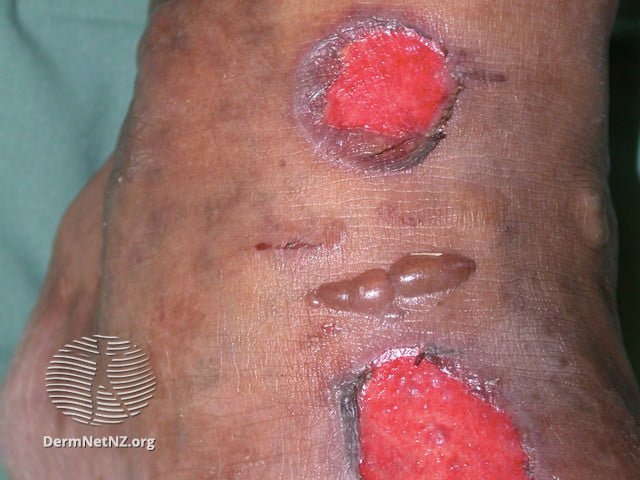
Foot Ulcers:
Some foot disorders are more likely to occur if there is nerve damage in the feet or an insufficient blood supply to the feet.
Blisters and wounds can develop, which may not heal. Toe, foot, or limb removal may be necessary for the treatment of certain infections (amputation).
The neuropathic foot is also at risk of developing microfracture and a deformed foot, called Charcot’s joint.
Complications during pregnancy:
For the mother and the child, high blood sugar levels might be harmful. Insufficient diabetes management raises the risk of miscarriage, stillbirth, and birth abnormalities.
Diabetic retinopathy, diabetic ketoacidosis, pregnancy-induced hypertension, and preeclampsia are all risks that parents with diabetes are more likely to experience.
Fetal complications may include premature birth, large for gestational age, neonatal hypoglycemia, and breathing difficulty at birth.
Vision Issues:
The retina, which is a portion of the eye that detects light, can suffer blood vessel damage from diabetes (diabetic retinopathy).
The result might be blindness. Other significant eye disorders, including cataracts and glaucoma, are also more common in those with diabetes.
Cardiovascular Diseases:
Diabetes raises the risk of some heart and blood vessel issues. These include excessive blood pressure, heart attack, stroke, coronary artery disease with chest discomfort (angina), and arterial constriction (atherosclerosis).
Complications of the skin and mouth:
Your susceptibility to skin and mouth complications may increase if you have diabetes. Fungal and bacterial infections are among them. It’s also more probable to have gum disease and dry mouth.
Diabetic Nephropathy:
Diabetic nephropathy or diabetic kidney disease is one of the most common and serious complications of longstanding uncontrolled diabetes.
People may develop leg swelling, swelling around the eyes, and frothy urine. The earliest tests to detect diabetic nephropathy include a urine dipstick for proteinuria and urinary microalbumin.
In advanced diabetic kidney diseases, patients may have gross proteinuria exceeding 300 mg per day, and the creatinine and urea may rise.
Diabetic kidney disease is one of the leading causes of end-stage renal diseases worldwide. It is one of the preventable diseases if managed well on time.
The Takeaway:
Make sure you do not worry yourself too much if you are diagnosed with T1DM. Keep in mind that several people around the globe suffer from the same condition, and you can always reach out for help.
Keep your diet and your lifestyle diabetic friendly. Do not miss your insulin dose. Get yourself regularly checked to detect any complications that may have developed over time.

- 97% Pure Berberine Powder – High-purity, plant-derived extract with a rich yellow color. Carefully processed and lab-tes…
- Naturally Bitter Taste – Berberine has a strong, naturally bitter flavor. Best enjoyed when mixed with smoothies, tea, c…
- 100g in Resealable Foil Pouch – Packaged in a premium aluminum pouch to protect from moisture and light, keeping the pow…


- 5 Delicious Flavors: Freeze-Dried Mango, Freeze-Dried Blueberry, Freeze-Dried Orange, Freeze-Dried Dragon Fruit & Freeze…
- Pure and Natural Ingredients: Our fruit powders are made without synthetic pesticides, GMOs, or harmful chemicals. Each …
- Health Benefits: Our carefully selected fruits are packed with antioxidants, vitamins, fiber, and digestive enzymes to s…

- 🌿 4 Tangy Citrus Flavors in One Pack: Enjoy a delicious variety of Orange, Lime, Lemon, and Kiwi powder – 5 sachets of e…
- 💧Easy to Mix & Refreshing: Just add to water, smoothies, sparkling drinks, or tea for a vibrant citrus kick. Dissolves i…
- 🛡️Rich in Vitamin C & Antioxidants: Made from real fruit powders, this mix offers a natural source of vitamin C to suppo…

- VARIETY PACK – Includes 5 delicious organic berry powder flavors: Freeze-Dried Goji Berry, Freeze-Dried Strawberry, Free…
- PURE INGREDIENTS – Made with 100% natural, freeze-dried berries and absolutely no added sugar, artificial ingredients, o…
- CONVENIENT PACKAGING – Contains 20 pre-portioned 5g packets (100g total), eliminating the need for measuring and ensurin…