 Dr. Ahmed Farhan

You have probably seen both names online. Berberine is a yellow plant compound that people promote for blood sugar and weight loss. Apigenin is a plant compound found in chamomile, and it is now sold as a powder and as capsules.
Both get called natural helpers for metabolic health. But the science behind them is not equal. One has been tested in dozens of human trials. The other has mostly been tested in cells and animals.
Even the one with human data comes with a twist that many social media posts leave out. Here is what the research really shows, in plain words.
Why this question is in the news right now
Berberine has become very popular on social media, including TikTok, mostly because of claims that it helps people lose weight.
That is according to the National Center for Complementary and Integrative Health (NCCIH), which is part of the U.S. National Institutes of Health.
Then two trials in JAMA Network Open, in 2025 and 2026, seemed to point in opposite directions. That left many readers confused.
Apigenin has its own wave of attention. It is often sold for sleep and calm, and now shoppers are asking whether it also helps blood sugar and weight.
Two very different plant compounds
Berberine is found in plants such as European barberry, goldenseal, goldthread, and Oregon grape. People have used these plants in traditional Chinese and Ayurvedic medicine for thousands of years.
Apigenin belongs to a big family of plant pigments called flavonoids. It shows up in many vegetables, fruits, and herbs.
Chamomile is the best-known source. In one kind of chamomile trial, the extract was set to contain about 1.2% apigenin, according to the Merck Manual.
That small percentage matters. A cup of tea or a handful of herbs gives you far less apigenin than a concentrated powder does. It also means that results from chamomile trials cannot simply be credited to apigenin alone.
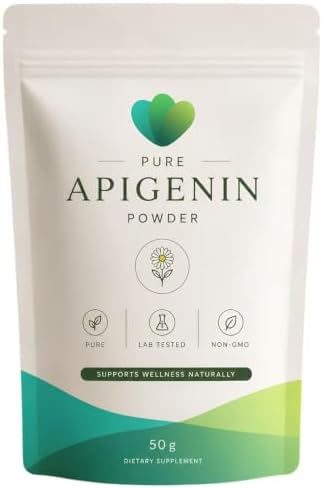
- 98% HIGH PURITY APIGENIN: Standardized to 98% purity, this premium apigenin powder delivers a highly concentrated plant-…
- GRAPEFRUIT PEEL EXTRACT: Carefully derived from premium grapefruit peel extract, providing a naturally sourced apigenin …
- LAB TESTED QUALITY: Independently lab tested for purity and consistency. Made with non-GMO ingredients and free from unn…
What the research says about berberine
The strongest evidence is a 2022 meta-analysis in Frontiers in Pharmacology. A meta-analysis combines the results of many studies to look for a pattern.
This one pulled together 37 randomized trials with 3,048 adults who had type 2 diabetes. In a randomized trial, people are assigned by chance to one treatment or another. That makes the comparison fairer.
On average, people in the berberine groups ended up with lower fasting blood sugar. The difference was about 0.82 mmol/L, which is roughly 15 mg/dL in U.S. units.
Their HbA1c was also lower, by about 0.63 percentage points. HbA1c is a blood test that shows your average blood sugar over about three months. For example, a drop that size could move someone from 8.0% to about 7.4%.
That is a real but modest change. And it comes with fine print.
- Only seven of the 37 trials compared berberine with a placebo or with no drug. Twenty tested berberine added to a diabetes medicine against that same medicine alone.
- All but one of the trials took place in China. The other was in Iran.
- The trials were short. They lasted from 14 days to 6 months.
- Many trials were thinly described. Only three explained how they kept group assignments hidden, and only six described keeping patients and staff unaware of who got what.
The researchers rated how sure we can be about the blood sugar results as moderate. That means the true effect is probably close to what they found, but better studies could change the picture.
Evidence check: moderate evidence that berberine lowers blood sugar a modest amount in people with type 2 diabetes. Most of it comes from short trials in one part of the world.
Why might berberine lower blood sugar? One lab-based idea is that it helps the pancreas release insulin, but mainly when blood sugar is already high.
This is a hypothesis, not a settled fact, and it does not rule out low blood sugar. Only two trials reported low blood sugar events, so the safety data on that question is very thin.

- 97% Pure Berberine Powder: High-purity, plant-derived extract with a rich yellow color. Carefully processed and lab-test…
- Naturally Bitter Taste: Berberine has a strong, naturally bitter flavor. Best enjoyed when mixed with smoothies, tea, co…
- 200g in Resealable Foil Pouch: Packaged in a premium aluminum pouch to protect from moisture and light, keeping the powd…
The twist: not all berberine is the same
In March 2025, JAMA Network Open published a trial of 113 adults with type 2 diabetes in China. They took a lab-made berberine salt called HTD1801.
It is designed to be absorbed better than plain berberine. After 12 weeks, people on the high dose had an HbA1c about 0.7 points lower than people on placebo. About 56% of them reached an HbA1c under 7%, compared with 15% on placebo.
Then, in January 2026, another JAMA Network Open trial tested a regular berberine supplement. It enrolled 337 adults who had obesity and fatty liver disease but did not have diabetes. They took 1 gram a day or a placebo for six months.
Berberine did not change belly fat or liver fat compared with placebo. It did lead to small drops in LDL cholesterol (often called bad cholesterol), a blood fat marker called ApoB, and a swelling marker called hs-CRP. Side effects were about the same in both groups.
These two trials used different forms of berberine in different groups of people. So they cannot be lined up head to head.
Editors at DynaMed, a clinical reference tool, wrote that the benefits seen with the lab-made version should not be assumed for supplements you can buy off the shelf. That is expert opinion, not new data. But it is a smart warning.
The lesson is simple. The word berberine in a headline can mean very different things. The product, the dose, and the people studied all matter.
Evidence check: the 2025 and 2026 results are from single randomized trials. They are emerging evidence, not final answers.
What the research says about apigenin
Apigenin’s story is different. Most of the excitement comes from the lab.
A 2024 systematic review in the Iranian Journal of Basic Medical Sciences looked at apigenin and metabolic syndrome.
Metabolic syndrome is a group of problems that often show up together. They include belly fat, high blood sugar, high blood pressure, and unhealthy blood fats.
The review read 46 full papers and called apigenin a promising candidate. But when we looked through the studies it lists, nearly all were done in cells, mice, rats, or hamsters.
Those studies suggest a few ideas. Apigenin may slow how fat cells form. It may protect the cells that make insulin. It may calm swelling in the body. These are hypotheses that still need to be tested in people.
One example is a 2016 study in the journal Nutrients. Mice fed a high-fat diet and given apigenin had lower fasting blood sugar, lower insulin, and a lower insulin resistance score after two weeks, according to a summary of the study. Their body weight did not change. And mice are not people.
In humans, the best evidence is for chamomile extract, not pure apigenin. The Merck Manual reports that one placebo-controlled trial of a chamomile extract showed a possible modest effect on mild-to-moderate anxiety.
Chamomile may also help sleep, but few studies have shown steady results. None of that is about blood sugar or weight.
In our search, we did not find large trials showing that pure apigenin improves blood sugar or body weight in people.
A 2024 review of apigenin research also lists limited absorption and possible drug interactions as challenges. Absorption, which scientists call bioavailability, simply means how much actually gets into your blood.
Evidence check: for blood sugar and weight, apigenin is mostly at the hypothesis and animal-study stage.

- 97% Pure Berberine Powder – High-purity, plant-derived extract with a rich yellow color. Carefully processed and lab-tes…
- Naturally Bitter Taste – Berberine has a strong, naturally bitter flavor. Best enjoyed when mixed with smoothies, tea, c…
- 100g in Resealable Foil Pouch – Packaged in a premium aluminum pouch to protect from moisture and light, keeping the pow…

Berberine and apigenin side by side
| Question | Berberine | Apigenin |
| What it is | A yellow plant compound from barberry, goldenseal, and similar plants | A plant pigment (flavonoid) found in vegetables, fruits, herbs, and chamomile |
| Human trials on blood sugar | Yes. A 2022 review combined 37 randomized trials in type 2 diabetes | In our search, no large trials of pure apigenin |
| Best-supported effect | Modest drop in blood sugar and HbA1c in type 2 diabetes (moderate certainty) | Chamomile extract may modestly help mild-to-moderate anxiety. This is not a blood sugar finding |
| Weight and fat | A 2026 trial found no change in belly or liver fat in adults without diabetes | Animal studies only. Body weight did not change in one mouse study |
| Biggest limits | Short trials, mostly in China. The product form matters | Mostly cells and animals. Limited absorption |
| Common side effects | Stomach problems: pain, constipation, diarrhea, nausea, vomiting | Not well mapped for pure supplements. Chamomile has drug interaction warnings |
| Key cautions | Avoid in pregnancy and breastfeeding. Not for infants. May interact with many medicines | Possible drug interactions. Talk with a clinician first |
What this means for obesity, diabetes, and metabolic health
If you have type 2 diabetes, the useful question is not which supplement is better. It is whether a supplement adds anything to your plan, and whether it is safe with your medicines.
Berberine has a modest, moderately supported signal for blood sugar. Apigenin does not yet have that kind of human proof.
If your main goal is weight or belly fat, the news is less exciting. The newest large trial in people with obesity and fatty liver found no effect on fat. Apigenin’s fat-related findings come from animals.
Neither supplement has been shown to beat, or safely replace, the basics. Those basics are good food, regular movement, enough sleep, and any medicine your clinician prescribes.
What we know and what we don’t
Here is what the evidence supports so far:
- In adults with type 2 diabetes, berberine lowered blood sugar by a modest amount in pooled trials.
- Berberine commonly causes stomach problems and can interact with medicines.
- Berberine should not be used during pregnancy or breastfeeding, and it should not be given to infants.
- Apigenin shows many effects in cells and animals. Those are hypotheses for people, not proof.
And here is what we still do not know:
- Whether store-bought berberine works as well as the lab-made version.
- Whether berberine’s effects last beyond a few months, or whether it is safe for years.
- Whether pure apigenin supplements help blood sugar or weight in people.
- What happens if you take the two together. We found no human studies on that.
Common misconceptions
Myth: Natural means safe. Not always. Berberine can cause stomach trouble and can interact with medicines. It can also cause or worsen jaundice in newborns, which can lead to a serious brain problem called kernicterus, according to NCCIH.
Myth: Berberine melts belly fat. The 2026 trial found no change in belly fat in adults with obesity and fatty liver. Claims online go further than the best recent evidence.
Myth: All berberine products are the same. They are not. The FDA has not reviewed berberine for safety and effectiveness, according to WebMD. An older analysis cited by Medical News Today also found wide differences in how much berberine capsules actually contained.
Myth: Apigenin is proven because chamomile is. Chamomile trials test a whole extract with many compounds in it. They cannot show what apigenin alone does.
Who should be especially careful
Talk with a doctor or pharmacist before using either one if any of these apply to you:
- You are pregnant, trying to become pregnant, or breastfeeding. MedlinePlus says berberine is likely unsafe in pregnancy.
- You are caring for a baby. Berberine should not be given to infants.
- You take medicine for diabetes, blood pressure, cholesterol, or heart disease. Berberine might lower blood pressure, and drug information sites warn it may interact with these medicines.
- You take transplant drugs or other medicines that the liver breaks down. MedlinePlus lists cyclosporine, tacrolimus, midazolam, dextromethorphan, and losartan among the possible interactions.
- You use tamoxifen, hormone therapy, or birth control that contains estrogen, and you are thinking about chamomile or apigenin products. The Merck Manual says chamomile may interfere with these medicines.
Practical, evidence-based steps
- Start with a conversation. Ask your doctor or pharmacist before adding either one. Bring the bottle so they can check the ingredients against your medicines.
- Keep your prescribed medicines. Do not stop, swap, or lower a medicine because of a supplement. Nothing in this research shows a supplement can safely replace one.
- Read labels with care. Look for products tested by an independent lab, and be wary of blends that hide what is inside.
- Change one thing at a time. If you and your clinician decide to try a supplement, add only that one, so you can tell what is causing any change.
- Get plant compounds from food first. Apigenin is part of a normal diet that includes vegetables, fruits, and herbs. Food is gentler, though it is not a treatment for diabetes.
- Put the basics first. Regular movement, enough sleep, and balanced meals still have the strongest track record. A supplement is, at best, a small extra.
Frequently asked questions
Is berberine better than apigenin for blood sugar?
Berberine has far more human research on blood sugar. Pooled trials in people with type 2 diabetes show a modest drop. For apigenin, we did not find comparable human trials. That does not prove apigenin does nothing. It means we do not know.
Does berberine help with weight loss?
The evidence is weak. In the 2026 trial of 337 adults with obesity and fatty liver, berberine did not reduce belly fat or liver fat compared with placebo. Claims online go further than the best recent evidence.
Can I take berberine and apigenin together?
We found no human studies that tested the two together, so no one knows if it helps or what the risks are. Both may interact with medicines. Ask your doctor or pharmacist before combining supplements.
Can berberine replace metformin or other diabetes medicine?
This research does not show that. Many of the trials tested berberine added to a medicine, not instead of it. Never stop or change a medicine without talking to your clinician.
Is berberine safe to take for a long time?
We do not know. Many trials lasted only weeks to months, and the 2022 review’s authors said short trial length limits what we can say about safety. The most common problems are stomach upset, such as diarrhea, constipation, gas, and nausea.
The bottom line
Berberine and apigenin often get lumped together as natural metabolic helpers. The evidence puts them in different boxes. Berberine has real human data showing a modest blood sugar benefit in people with type 2 diabetes. But that data is short-term, comes mostly from one region, and may not apply to every product on the shelf.
Apigenin is an interesting plant compound with a lot of lab promise. It does not yet have much human proof for blood sugar or weight.
Neither one is a shortcut. If you are curious about either, bring the question to a clinician who knows your medicines and health history.
This article is for general education. It is not medical advice, and it does not diagnose or treat any condition.
References
- Xie W, Su F, Wang G, et al. Glucose-lowering effect of berberine on type 2 diabetes: a systematic review and meta-analysis. Frontiers in Pharmacology. 2022;13:1015045. [Link]
- Berberine in diabetes-free adults with obesity and MASLD (337 participants, 1 g/day vs placebo, 6 months). JAMA Network Open. 2026;9(1):e2554152. Read via a news summary: [Link]
- Berberine ursodeoxycholate (HTD1801) trial in 113 adults with type 2 diabetes. JAMA Network Open. 2025;8(3):e2462185. Read via the DynaMed summary listed next.
- DynaMed EBM Focus Editorial Team. Berberine: Ancient Antidote Turned Modern Moiety. EBM Focus, Volume 22, Issue 7. [Link]
- National Center for Complementary and Integrative Health (NCCIH). In the News: Berberine. [Link]
- MedlinePlus (U.S. National Library of Medicine). Berberine. [Link]
- Javadi and Sobhani. Role of apigenin in targeting metabolic syndrome: a systematic review. Iranian Journal of Basic Medical Sciences. 2024. [Link]
- Alam W, Rocca C, Khan H, et al. Current status and future perspectives on therapeutic potential of apigenin: focus on metabolic-syndrome-dependent organ dysfunction. Antioxidants. 2021. [Link]
- Jung UJ, Cho YY, Choi MS. Apigenin ameliorates dyslipidemia, hepatic steatosis and insulin resistance by modulating metabolic and transcriptional profiles in the liver of high-fat diet-induced obese mice. Nutrients. 2016;8:305. Read via a summary: [Link]
- Merck Manual Professional Version. Chamomile (full review July 2025). [Link]
- Review of apigenin’s preclinical and clinical research, including bioavailability and drug interaction challenges. Springer, 2024. [Link]
- WebMD. Berberine. [Link]
- Medical News Today. Berberine overview (cites an older analysis of capsule content). [Link]