
 Dr. Ahmed Farhan

You’ve probably eaten apigenin without ever knowing its name. It’s the plant compound sitting quietly inside your cup of chamomile tea, your parsley garnish, and your celery stick.
For years, apigenin was mostly known as “the calming one” — the reason chamomile tea helps some people relax before bed.
Lately, though, apigenin has been showing up somewhere else: obesity and diabetes research labs.
Scientists have been feeding it to mice and rats on high-fat diets and watching what happens to their blood sugar, their liver fat, and their waistlines.
The early results are interesting. But “interesting in mice” and “proven in people” are two very different things, and the gap between them is exactly what this article is about.
Why Apigenin Is Getting Attention Right Now
Apigenin powder and capsules have become easy to find online, often marketed alongside other “natural” metabolic-health ingredients.
At the same time, interest in plant compounds called flavonoids — found in colorful fruits, vegetables, and herbs — has grown as people look for food-based ways to support blood sugar and weight, alongside (not instead of) medical care.
Apigenin sits right at that intersection. It’s cheap to study, it’s already something people eat in small amounts every day, and a wave of animal research over the past several years has kept finding metabolic effects worth a closer look.
What the Animal Research Says
Almost everything we know about apigenin and metabolism comes from studies in mice and rats, not people. That’s an important detail to hold onto as you read the rest of this article.
In these animal studies, researchers usually take rodents, feed some of them a high-fat diet to make them gain weight and develop blood sugar problems, and then give a portion of those animals apigenin alongside the same diet.
Across a number of separate research groups, the apigenin-fed animals tended to end up with less body fat, lower fasting blood sugar, less fat buildup in the liver, and calmer levels of inflammation than the animals that didn’t get it.
One 2024 systematic review pulled together dozens of these animal and lab-based studies and confirmed the pattern was consistent: apigenin seemed to interfere with several of the biological steps that lead from a high-fat diet to obesity and insulin resistance.
What Researchers Actually Found
Here’s what the science looks like underneath the surface, translated out of lab language:
- Less fat-making in the liver. Apigenin appears to turn down genes that tell liver cells to build new fat, while turning up genes that help the body burn fat for fuel instead of storing it.
- Steadier blood sugar. In several rodent studies, apigenin helped normalize fasting blood sugar by supporting how well insulin-producing cells worked, rather than by acting like a blood-sugar-lowering drug.
- Changes to gut bacteria. One study found apigenin shifted the mix of bacteria living in the gut in a way that seemed to reduce inflammation and support the gut’s lining — a growing area of interest in metabolic research generally.
- A possible energy-switch effect. Some researchers found apigenin can block a protein called CD38, which affects how much of a molecule called NAD+ is available inside cells. NAD+ is important for how cells produce and use energy, and low levels have been linked to obesity.
- “Browning” of fat tissue. A few studies found apigenin encouraged white fat tissue (the energy-storing kind) to behave more like brown fat tissue (the kind that burns energy as heat) in mice.
Each of these is a real, published finding. None of them, on their own, means apigenin will do the same thing in a human body — and none of these studies were done in people.
What This Actually Means for Obesity, Diabetes, and Metabolic Health
Taken together, this is genuinely promising early-stage evidence. It’s the kind of research that often comes before human trials get funded and run.
But right now, apigenin’s metabolic benefits sit almost entirely in the “emerging, preclinical” category of evidence — meaning the mechanism is plausible, and the animal data is consistent, but it hasn’t yet been confirmed in human clinical trials.
That matters because animal studies often use doses, per pound of body weight, that are far higher than what a person would realistically get from food or a typical supplement serving.
A result in a mouse fed a specific concentrated dose doesn’t automatically scale down to a person taking a capsule once a day.
Practical Implications: Why Your Body May Not “Use” Apigenin the Way a Mouse Does
There’s another wrinkle that matters just as much as the missing human trials: apigenin is not absorbed very well by the human body.
Research measuring apigenin levels in healthy adults after eating apigenin-rich food found that very little of it actually made it into the bloodstream intact — researchers estimated oral bioavailability at roughly 30%, and in some studies far less was recovered in urine, suggesting the body processes and clears most of it quickly.
Once absorbed, apigenin also leaves the bloodstream fairly fast, with an average elimination half-life of around two and a half hours in the studies that have measured it.
In plain terms: your body doesn’t hang onto much of the apigenin you eat or take, and what it does absorb doesn’t stick around for long.
That doesn’t mean it’s useless — it may still interact usefully with the gut and gut lining even without being fully absorbed — but it does mean you can’t assume a supplement label’s milligram count translates directly into how much reaches your bloodstream, let alone your liver or fat tissue.
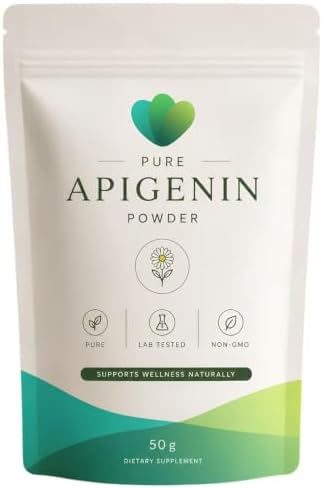
- 98% HIGH PURITY APIGENIN: Standardized to 98% purity, this premium apigenin powder delivers a highly concentrated plant-…
- GRAPEFRUIT PEEL EXTRACT: Carefully derived from premium grapefruit peel extract, providing a naturally sourced apigenin …
- LAB TESTED QUALITY: Independently lab tested for purity and consistency. Made with non-GMO ingredients and free from unn…
What We Know
- Apigenin is a real, well-studied plant compound found naturally in chamomile, parsley, celery, spinach, artichokes, and oregano.
- A consistent body of animal research links apigenin to improvements in blood sugar, liver fat, inflammation, and body fat in high-fat-diet rodent models.
- Apigenin is generally considered safe when eaten as part of a normal diet, with no reported toxicity at typical dietary intake levels.
- Human absorption of apigenin is limited and short-lived, which affects how much of any dose actually reaches the rest of the body.
What We Don’t Know
- There are currently no completed human clinical trials testing apigenin, on its own, for blood sugar, weight, or liver fat outcomes.
- We don’t know what an effective, safe human dose for metabolic benefits would even look like, since human dosing hasn’t been tested for this purpose.
- Supplement products vary widely in purity, concentration, and manufacturing quality, and none of the animal research was done using an off-the-shelf commercial powder or capsule.
- The long-term safety of taking concentrated apigenin supplements daily, rather than eating it in food amounts, has not been studied in people.
Common Misconceptions Worth Clearing Up
“If it worked in mice, it’ll work the same way in me.”
Animal studies are a starting point for research, not a finish line. Mice metabolize compounds differently than people, and the doses used in these studies were often much higher, relative to body weight, than what someone would get from food or a standard supplement serving.
“It’s natural, so it’s automatically safe in any amount.”
Apigenin is safe at the levels found in food. But “natural” doesn’t mean “unlimited.” At very high doses, well beyond typical dietary intake, animal research has reported a sedating effect. More isn’t automatically better, and concentrated supplement doses are a different situation from a garnish of parsley.
“A supplement can treat or replace a diabetes or weight medication.”
Nothing in the current research supports using apigenin as a treatment for diabetes, obesity, or any diagnosed condition, or as a substitute for prescribed medication. It’s a dietary compound being studied, not an approved treatment.
Who Should Be Particularly Careful
Apigenin can affect a liver enzyme called CYP2C9, which is responsible for breaking down a number of common prescription medications, including some blood thinners. This means concentrated apigenin supplements could, in theory, change how those medications are processed by the body.
A few groups have extra reason for caution and a conversation with a doctor or pharmacist before adding an apigenin supplement:
- Anyone taking a blood thinner or another medication that is broken down by liver enzymes.
- Anyone with an existing liver condition.
- Anyone who is pregnant or breastfeeding, since there is no human safety data in these groups for concentrated apigenin supplements.
- Anyone managing diabetes or obesity with prescribed medication, who should never adjust that treatment based on a supplement.
Practical, Evidence-Based Recommendations
- Enjoy apigenin the way people always have — through foods like chamomile tea, parsley, celery, and oregano — as part of an overall balanced diet, not as a targeted “treatment.”
- Don’t expect a concentrated powder or capsule to reproduce what happened in a high-dose mouse study.
- If you’re considering an apigenin supplement, talk to your doctor or pharmacist first, especially if you take any prescription medication, including blood thinners.
- Never stop, start, or change a diabetes or weight-loss medication based on a supplement, apigenin included.
- If you do try a supplement, choose a brand that discloses third-party testing, since quality and concentration vary widely across products.
Frequently Asked Questions
What is apigenin and where does it come from?
Apigenin is a natural plant compound, called a flavone, found in common foods and herbs like chamomile, parsley, celery, spinach, artichokes, and oregano. It’s one of the compounds researchers believe contributes to chamomile tea’s calming reputation.
Does apigenin actually lower blood sugar?
In several animal studies, apigenin helped normalize fasting blood sugar in mice and rats with diet-induced metabolic problems. There are no completed human trials yet confirming this effect in people, so it’s accurate to call this a promising, unproven finding rather than an established one.
Can apigenin help you lose weight?
Animal studies have linked apigenin to less fat gain and changes in how fat tissue behaves, but this hasn’t been tested in human weight-loss trials. It shouldn’t be treated as a weight-loss product based on current evidence.
Is it safe to take apigenin supplements?
Apigenin is considered safe at the levels found in a normal diet. Concentrated supplement doses haven’t been as thoroughly studied for long-term safety in people, so it’s worth talking to a doctor before starting one, particularly if you take other medications.
Does apigenin interact with medications?
Apigenin can affect a liver enzyme (CYP2C9) that helps break down several common medications, including some blood thinners. If you take prescription medication, check with your doctor or pharmacist before adding a concentrated apigenin supplement.
Conclusion
Apigenin is a genuinely interesting compound, and the animal research on its metabolic effects is more consistent than a lot of trendy supplement science tends to be.
That’s worth taking seriously. But “worth taking seriously” isn’t the same as “proven to work in people,” and right now, the honest answer is that we’re still waiting on the human studies that would tell us whether any of this translates from a mouse cage to your kitchen table.
Until then, the most evidence-based way to relate to apigenin is the oldest one: as a compound you already get, in small amounts, from foods like parsley, celery, and chamomile tea — not as a stand-in for medical care, and not as a supplement to take in large amounts without a conversation with your doctor first.
References
Javadi, B. & Sobhani, Z. (2024). Role of apigenin in targeting metabolic syndrome: A systematic review. Iranian Journal of Basic Medical Sciences. https://doi.org/10.22038/IJBMS.2024.71539.15558 [link]
Feng, X., et al. Apigenin Ameliorates Dyslipidemia, Hepatic Steatosis and Insulin Resistance by Modulating Metabolic and Transcriptional Profiles in the Liver of High-Fat Diet-Induced Obese Mice. PMC. https://www.ncbi.nlm.nih.gov/pmc/articles/PMC4882717/
Qiao, Y., et al. (2022). Apigenin Alleviates Obesity-Associated Metabolic Syndrome by Regulating the Composition of the Gut Microbiome. Frontiers in Microbiology, 12:805827. https://doi.org/10.3389/fmicb.2021.805827
The CD38 Inhibitor, Apigenin, Ameliorates Obesity-Related Metabolic and Inflammatory Dysfunction via Boosting the NAD+/SIRT1 Axis in Rats on High Fat Diet. PMC. https://pmc.ncbi.nlm.nih.gov/articles/PMC12937541/
Dietary Apigenin Relieves Body Weight and Glycolipid Metabolic Disturbance via Pro-Browning of White Adipose Mediated by Autophagy Inhibition. PubMed. https://pubmed.ncbi.nlm.nih.gov/37436078/
Borges, G., Fong, R.Y., Ensunsa, J.L., Kimball, J., Medici, V., Ottaviani, J.I., & Crozier, A. (2022). Absorption, distribution, metabolism and excretion of apigenin and its glycosides in healthy male adults. Free Radical Biology & Medicine, 185, 90-96.
DeRango-Adem, E.F. & Blay, J. (2021). Does Oral Apigenin Have Real Potential for a Therapeutic Effect in the Context of Human Gastrointestinal and Other Cancers? Frontiers in Pharmacology, 12:681477. https://doi.org/10.3389/fphar.2021.681477
Examine.com. Apigenin — Research Summary. https://examine.com/supplements/Apigenin/
Alzheimer’s Drug Discovery Foundation. Apigenin — Cognitive Vitality For Researchers. https://www.alzdiscovery.org/