 Dr. Ahmed Farhan

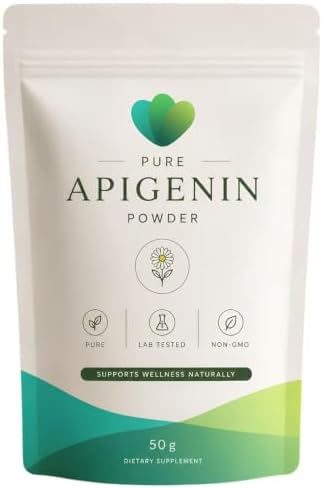
Apigenin is everywhere right now. Social media posts call it a natural sleep aid. Wellness podcasts talk about it for aging, blood sugar, and weight. Stores sell it in small capsules, often labeled 50 mg.
So does it actually work? The honest answer is “maybe, but we don’t know yet.” Apigenin is a real plant compound, and it does interesting things in lab studies.
But most of the proof comes from cells and animals. Very little comes from people taking pure apigenin. This article walks through what the research really says so that you can tell the facts from the hype.
Why Apigenin Is Trending Right Now
Apigenin is a flavonoid. It is a natural chemical made by plants. You can find apigenin in parsley, celery, apples, oranges, nuts, and chamomile. Chamomile tea is the best-known source.
In the past few years, supplement makers began selling apigenin on its own. The most common capsule is 50 mg, and many are sold for sleep and relaxation. Online reviews, podcasts, and “biohacking” groups helped the trend grow fast.
Here is the catch. Some supplement sites have pointed out that no human trial has tested pure apigenin at that dose for sleep.
One supplement seller even says that common dose ranges come from calculations and animal studies, not human trials. In other words, the popularity has moved faster than the proof.
To keep things clear, we label how strong the evidence is as we go. Established evidence means many good studies agree.
Emerging evidence means early and promising. An observational link means two things go together, but one may not cause the other. A hypothesis is an idea that still needs to be tested.
What the Latest Research Says
Apigenin and sleep
Most of the sleep excitement comes from animal research. A 2024 review in the journal Frontiers in Nutrition pulled this work together.
In mice and rats, apigenin had calming effects. In older mice, it raised levels of NAD+, a molecule that helps cells make energy and that drops as we age.
The review also says apigenin seems to act on several targets in the body. One is the GABA system. GABA is a brain chemical that helps quiet nerve activity.
Others are linked to swelling in the body. For people, this is a hypothesis, not a proven fact. Animal brains and human brains are not the same.
What about humans? The review points out that the human studies used chamomile extract, not pure apigenin.
Chamomile holds many compounds, so we can’t say apigenin did the work. The review also notes that adults who ate more apigenin in their food tended to report better sleep in a large group.
That is an observational link. People who eat lots of plants may sleep better for many other reasons.
The U.S. National Center for Complementary and Integrative Health (NCCIH) is more careful. It says early studies suggest a chamomile supplement might help with generalized anxiety disorder, which is long-lasting worry that is hard to control.
But it also says there is very little information on chamomile and insomnia. A 2019 review found only one insomnia study, and that study found no benefit.
Evidence rating: hypothesis for pure apigenin (from animal studies). For chamomile, early and limited human evidence for anxiety, and very little for sleep.
Apigenin, blood sugar, and weight
If you care about blood sugar and weight, this part matters most. A systematic review in the Iranian Journal of Basic Medical Sciences looked at apigenin and metabolic syndrome.
Metabolic syndrome is a group of problems that often show up together. They include extra belly fat, high blood pressure, high blood sugar, and unhealthy blood fats.
The team found more than 1,000 papers and studied 46 of them in detail. The work they described came mostly from cells and animals.
In those experiments, apigenin slowed the growth of new fat cells. In diabetic animals, it seemed to protect the cells in the pancreas that make insulin.
It also lowered the activity of genes that make fat and cholesterol. The authors called apigenin a promising candidate. In science, “promising” is the word used for early work.
One example is a mouse study in the journal Nutrients. Mice ate a high-fat diet for 16 weeks. Some also got a small amount of apigenin in their food.
Those mice had better insulin response, less fat in the liver, and healthier blood fats. That is encouraging. But mice are not people, and results often shrink or disappear when tested in humans.
A 2021 review in the journal Antioxidants adds another twist. Gut bacteria have enzymes that can break down apigenin.
Gut bacteria also play a role in metabolic health. Scientists are only starting to study how these pieces fit together.
Evidence rating: emerging, but mostly from cells and animals. Apigenin has not been shown to cause weight loss or to treat diabetes in people.
Apigenin and cancer
Apigenin also gets attention in cancer research. In lab dishes, reviews say it can slow or kill some kinds of cancer cells.
In a University of Missouri study, rats with a type of breast cancer that was sped up by a hormone drug were given apigenin.
They had fewer tumors, and the tumors showed up later. But apigenin did not stop the first cancer cells from forming.
The researchers said apigenin is not absorbed well and that no human dose is known. They said human trials were the next step. This is not proof that apigenin treats or prevents cancer in people.
Evidence rating: hypothesis, based on cell and animal studies.
The Big Problem: Your Body Absorbs Very Little
Apigenin does not dissolve well in water. Several reviews say this leads to poor absorption. Your gut takes in only a small amount, and your body breaks much of that down quickly.
Picture stirring a spoonful of cooking oil into a glass of water. Most of it floats on top and will not mix. Apigenin acts a bit like that in your gut.
This matters because an amount that works in a lab dish, or in a mouse, may not reach the same level in your blood.
Scientists are testing special forms, such as tiny fat bubbles called liposomes and other nano-sized carriers.
But one review of these methods says more animal and cell experiments are still needed. Some products advertise better absorption. Ask whether there is real human research behind that claim.
What This Means for Obesity, Diabetes, and Metabolic Health
Metabolic health is built on big daily habits. These include what you eat, how you move, how you sleep, and any medicine your doctor prescribes. Apigenin has not been shown to replace or boost any of these in people.
Poor sleep is linked with harder blood sugar and weight control. That is one reason sleep aids get so much attention.
But apigenin has not yet been proven to improve sleep in people. If you often sleep badly, a health care provider can check for causes that can be treated.
Practical Takeaways
For now, apigenin looks like a plant compound worth studying, not a must-have supplement. You can get some of it from foods you may already eat.
Those foods also bring fiber, vitamins, and other helpful plant chemicals. A capsule brings only the one compound, and we do not yet know if that helps.
What We Know and What We Don’t
What we know:
- Apigenin is a natural plant compound found in common foods and in chamomile.
- In cells and animals, it affects pathways tied to sleep, fat, blood sugar, and swelling.
- The human body absorbs it poorly.
- Chamomile has early, limited human evidence for anxiety.
What we don’t know:
- Whether pure apigenin helps people sleep.
- Whether it helps blood sugar or weight in people.
- What dose, if any, is both safe and useful, and how safe long-term use is.
- Which parts of chamomile, if any, do the work.
Common Misconceptions
“Natural means safe.” Not always. Natural products can cause allergies and can interact with medicines. NCCIH says chamomile can cause allergic reactions in some people and has been reported to interact with the blood thinner warfarin. NCCIH also notes that supplements are not approved by the FDA before they are sold.
“If it works in mice, it works in me.” Many things that work in mice fail in people. That is why human trials matter.
“A cup of chamomile tea equals a 50 mg capsule.” No one has shown that. A tea and a capsule are very different, and we do not know how much apigenin your body actually takes in from either one.
“Apigenin is a weight loss supplement.” There is no human evidence for that. Animal results are not the same as proof.
Who Should Be Extra Careful
Most safety information comes from studies of chamomile, not pure apigenin. A review of apigenin research also points to possible drug interactions and a need for better-standardized products.
With that in mind, talk to a doctor or pharmacist before trying an apigenin or chamomile supplement if any of these apply to you:
- You take medicine, especially a blood thinner such as warfarin, a sedative, or medicine for diabetes.
- You are allergic to ragweed, daisies, marigolds, or chrysanthemums. NCCIH says people with these allergies are more likely to react to chamomile.
- You are pregnant or breastfeeding. NCCIH says little is known about chamomile safety in these cases.
- You use birth control pills or have a condition that is sensitive to estrogen. NCCIH says chamomile might have some estrogen-like effects.
- You are thinking about giving a supplement to a child.
Practical, Evidence-Based Recommendations
Start with food. Parsley, celery, fruits, nuts, and other plants contain apigenin along with many other healthy compounds. Eating more of these is a safe move for most people.
If you enjoy chamomile tea, it is a low-risk choice for most people. NCCIH says chamomile is likely safe in the amounts found in teas and foods. Skip it if you have the allergies listed above, and check with your provider if you take medicine.
Work on the sleep basics. A steady bedtime, a dark and cool room, and less caffeine late in the day are common first steps that health professionals suggest. They cost little and carry little risk.
Be cautious with capsules. If you are curious, talk to your health care provider or pharmacist first. Do not use apigenin in place of any prescribed medicine, and do not change any medicine on your own.
Doubt big promises. Any product that claims to cure or treat a disease with apigenin is going beyond the evidence.
Frequently Asked Questions
What is apigenin?
Apigenin is a natural plant chemical in the flavonoid family. It is found in parsley, celery, chamomile, and some fruits and nuts.
Is apigenin the same as chamomile?
No. Chamomile is a plant that contains apigenin along with many other compounds. Human studies on sleep and anxiety have used chamomile extract, not pure apigenin.
Does apigenin help you sleep?
We do not know yet. Animal studies show calming effects, but no good human trial has tested pure apigenin for sleep. Chamomile has very little evidence for insomnia, according to NCCIH.
Can apigenin lower blood sugar or help with weight loss?
It has shown some effects in cells and in animals. It has not been proven to do either in people. It should not replace diabetes care or a weight management plan from your provider.
Can apigenin fight cancer?
In lab dishes and in animals, it has slowed some cancers. That is early research. There is no proof that it treats or prevents cancer in people.
Is apigenin safe?
Food sources are considered safe for most people. For capsules, long-term safety in humans is not well studied, and possible drug interactions have been raised. Ask your provider, especially if you take medicine or are pregnant.
The Bottom Line
Apigenin is an interesting plant compound with real lab results. It may affect sleep pathways, fat cells, and blood sugar in animals.
But the jump from a mouse to you is a big one, and your body absorbs it poorly. Right now, the claims on many bottles are ahead of the science.
The smart move is simple. Eat more plants, build good sleep habits, and talk to a health professional before adding any supplement. As human trials come in, we will learn more. Until then, treat apigenin as a topic to watch, not a cure to buy.
This article is for general education. It is not medical advice and does not replace care from your health care provider.
References
- Apigenin: a natural molecule at the intersection of sleep and aging. Frontiers in Nutrition, February 2024. https://doaj.org/article/0fc7ba7d55d24f53a5a22b0ad31d920e [Link]
- National Center for Complementary and Integrative Health (NIH). Chamomile: Usefulness and Safety. Last updated November 2024. https://www.nccih.nih.gov/health/chamomile
- Role of apigenin in targeting metabolic syndrome: A systematic review. Iranian Journal of Basic Medical Sciences. https://ijbms.mums.ac.ir/article_23826.html
- Jung UJ, Cho YY, Choi MS. Apigenin ameliorates dyslipidemia, hepatic steatosis and insulin resistance by modulating metabolic and transcriptional profiles in the liver of high-fat diet-induced obese mice. Nutrients, 2016;8:305. https://pmc.ncbi.nlm.nih.gov/articles/PMC4882717
- Alam W, Rocca C, Khan H, et al. Current status and future perspectives on therapeutic potential of apigenin: focus on metabolic-syndrome-dependent organ dysfunction. Antioxidants, 2021;10(10):1643. https://doi.org/10.3390/antiox10101643
- Review of apigenin’s biological activity, metabolism, stability and delivery systems. Frontiers in Nutrition, 2023. https://pmc.ncbi.nlm.nih.gov/articles/PMC10410563
- Pharmacological potential of apigenin: a dietary flavonoid with emerging synergistic interactions in therapeutics. Exploration of Foods and Foodomics, 2025. https://www.explorationpub.com/Journals/eff/Article/1010174
- Review of apigenin’s preclinical and clinical evidence, bioavailability, and drug interactions. Springer, 2024. https://link.springer.com/article/10.1007/s44372-024-00039-6
- University of Missouri. Parsley, celery carry crucial component for fight against breast cancer, MU researcher finds (study published in Cancer Prevention Research). 2011. https://www.nutritioninsight.com/news/parsley-celery-carry-crucial-component-for-fight-against-breast-cancer-mu-researcher-finds.html
- MSD Manual Consumer Version. Chamomile. https://www.msdmanuals.com/sw/home/special-subjects/dietary-supplements-and-vitamins/chamomile
- Market context only (commercial sources, not used as medical evidence): Apigenin for Sleep: Trending Supplement 2026, mattressmiracle.ca; How Much Apigenin for Sleep?, Nootropics Depot.