
 Dr. Ahmed Farhan
Have you ever been annoyed by itchy patches on your skin? You might have psoriasis, eczema, or a fungal skin infection.
These skin conditions can cause itching, redness, and rashes, and can get worse if not treated.
Psoriasis and eczema are two common skin issues that can be very uncomfortable and often look alike.
Even though they share some symptoms, psoriasis and eczema are actually different from each other.
What is Psoriasis?
This is an autoimmune state that changes the way normal life cycles of skin cells occur. Cells within healthy skin grow deep inside the layers and then slowly rise to the surface while old cells shed to make space for newer ones [ref].
So, this process takes about a month; however, in psoriasis, this cycle goes into overdrive, and cells start multiplying up to 10 times faster.
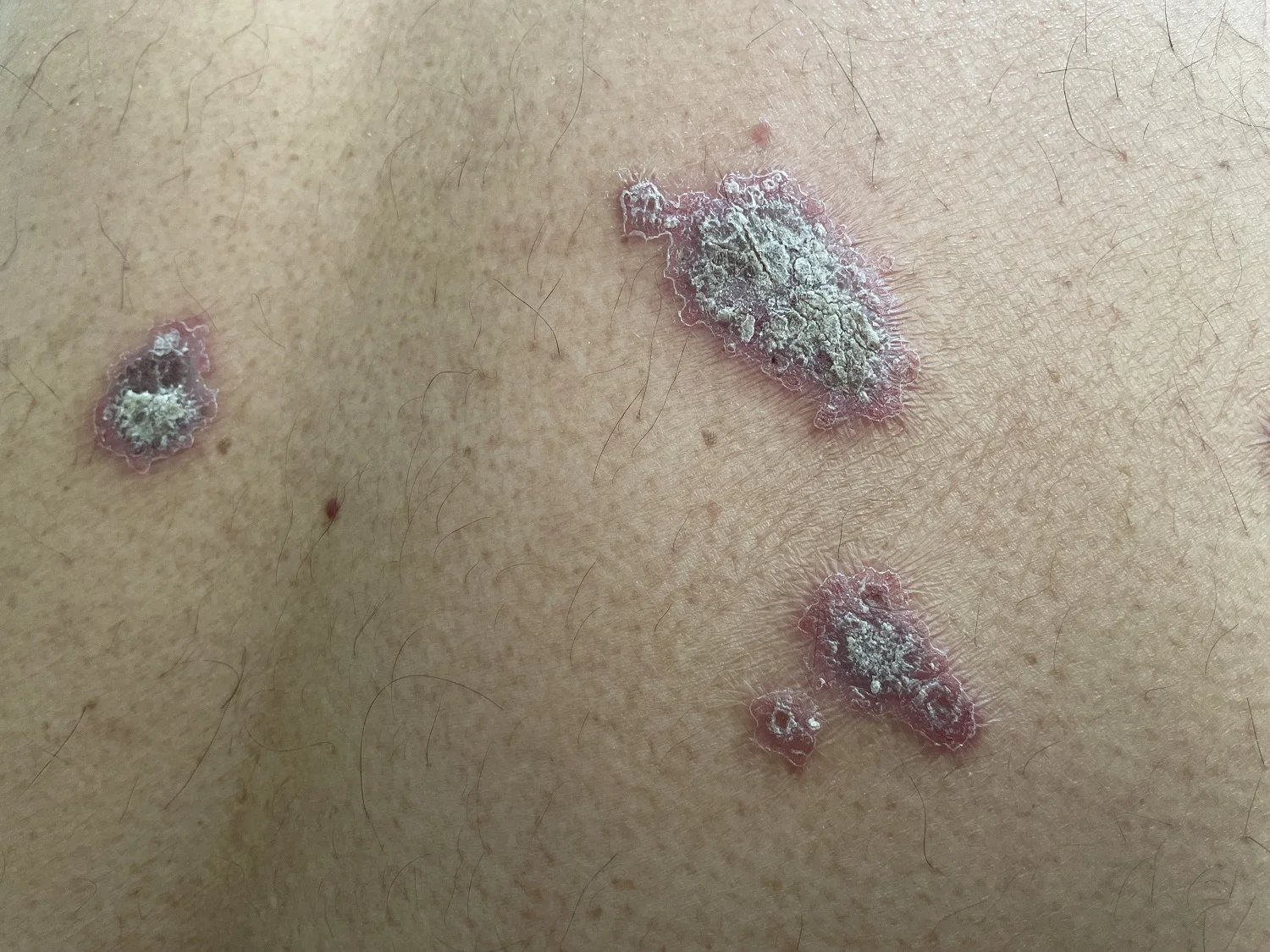
Since this cycle is going at a faster pace, it results in the formation of piles of old cells on the surface. This leaves thick red and scaly patches called psoriasis plaques.
They can appear anywhere on the body, but mostly on the elbows, knees, scalp, and lower back.
While we are unaware of what causes psoriasis, it is believed that environmental factors can play a huge role.
What is Eczema?
This is also called atopic dermatitis and is an inflammatory skin condition that also causes allergy.
Unlike psoriasis, this is not an autoimmune condition attacking healthy cells.
Instead, eczema impairs the natural skin barrier, which makes it more susceptible to irritants and allergens in the environment [ref]. It leads to dry, itchy, and swollen patches on the body.
Eczema can look different, sometimes showing small bumps or even oozing fluid in bad cases.
Kids usually get eczema on their face, hands, and inner elbows, while adults might have it on their hands, feet, and eyelids.
Things that can make eczema worse include allergens (like dust mites or pollen), irritants (like strong soaps or wool), and dry weather.
Like psoriasis, eczema does not spread from person to person but can be common in families with a history of allergies.
Psoriasis Vs Eczema Symptoms
Feature | Psoriasis | Eczema |
| Cause | Autoimmune disease (overactive immune system) | Allergic component (disrupted skin barrier) |
| Symptoms (main) | Thick, red, scaly plaques | Dry, itchy, inflamed patches of skin |
| Location (common) | Elbows, knees, scalp, lower back, nails, genitals (less common) | Face, hands, inner elbows (children), hands, feet, eyelids (adults) |
| Scales | Silvery white, prominent | Less prominent, finer scaling (if present) |
| Blisters | Rare | May develop small blisters, weeping in severe cases |
| Itching | Mild to moderate burning sensation is possible | Intense, often worse at night |
| Flare-up patterns | Cyclical, with periods of remission and flare-ups | More variable, triggered by specific allergens or irritants |
| Skin bleeding | Possible, especially if scratched excessively | Less common |
| Koebner phenomenon | New plaques develop at sites of injury/irritation | Not a feature |
Psoriasis Vs Eczema Diagnosis:
Diagnosing psoriasis and eczema typically involves a combination of factors, but there’s no single definitive test.
Here’s a breakdown of the diagnostic tests for each:
Psoriasis Diagnosis:
Medical history:
Your doctor will ask about your own and your family’s medical history to understand your risk for psoriasis. They will want to know if anyone in your family has autoimmune diseases.
Physical examination:
A skin doctor will carefully check your skin, scalp, and nails for signs of psoriasis. They look for thick, red patches with silvery scales. The location of these patches can help, too. They often show up on elbows, knees, scalp, and lower back. [ref].
Biopsy (optional):
Sometimes, the doctor might take a small piece of your skin to look at under a microscope. This helps confirm the diagnosis, especially if your symptoms are unusual.
Eczema Diagnosis:
Physical examination:
A skin doctor will look at your skin closely for signs of eczema. They will check for dry, itchy, and red areas.
In young kids, these patches often show up on the face, hands, and inner elbows, which can be a sign of eczema.
Allergy testing (optional):
If your doctor thinks allergies might be causing your eczema, they might suggest allergy tests to find out what you are allergic to.
Patch testing (optional):
This test helps find things that might be causing your eczema to get worse. Different substances are put on small patches on your back, and the reactions are watched for a few days.
Psoriasis Vs Eczema Treatment
Both conditions can be treated based on their underlying causes and symptoms.
Here is a breakdown:
Treatment of Eczema (Atopic Dermatitis):
Eczema treatment focuses on managing symptoms like dryness and inflammation.
The first line of defense is usually a good skincare routine with fragrance-free moisturizers and emollients to strengthen the skin barrier and prevent dryness.
Doctors may prescribe topical corticosteroids, which reduce inflammation and itching during flare-ups.
In severe cases, they might recommend immunomodulatory medications (calcineurin inhibitors) or phototherapy (controlled exposure to ultraviolet light) to suppress the immune system’s overreaction.
Since eczema can be triggered by allergens and irritants, identifying and avoiding those triggers is crucial for long-term management [ref].
Treatment of Psoriasis:
Treatment includes slowing down the rapid skin cell turnover and reducing inflammation.
Moisturizers are essential to maintain skin health just like in eczema and topical corticosteroids are also used for mild to moderate psoriasis.
However, doctors might prescribe stronger medications like calcipotriol (vitamin D derivative) or tazarotene (retinoid) for better control.
For moderate to severe psoriasis, systemic medications like methotrexate or cyclosporine that target the entire immune system may be necessary.
Another good treatment option is using biological drugs as they target specific proteins that cause inflammation.
Unlike eczema, identifying triggers plays a less prominent role in psoriasis treatment, although stress management can be helpful for some patients.
In Conclusion:
Psoriasis and eczema are two common skin conditions with similar symptoms. Identifying the two conditions is important as treatments and long-term prognoses are different.
The table below summarizes the key differences between psoriasis and eczema:
Feature | Psoriasis | Eczema |
| Appearance | Thick, red patches with silvery scales | Red, inflamed, and itchy rashes |
| Common Locations | Elbows, knees, scalp, lower back | Inside elbows, behind knees, neck, wrists |
| Itchiness | Mild to severe itching | Intense itching, especially at night |
| Triggers | Stress, skin injury, infections, cold weather | Allergens, irritants, stress, temperature changes |
| Skin Texture | Dry, raised, and rough | Dry, cracked, or leathery |
| Age of Onset | Can develop at any age, commonly 15-35 | Usually begins in childhood |
| Associated Symptoms | Joint pain (psoriatic arthritis) | Asthma, hay fever |
| Treatment | Topical treatments, phototherapy, systemic medications | Moisturizers, corticosteroids, immunomodulators |
| Chronicity | Chronic, long-lasting | Can be chronic but also may resolve over time |
| Family History | Often a family history of psoriasis | Often a family history of eczema, asthma, or allergies |

- 97% Pure Berberine Powder – High-purity, plant-derived extract with a rich yellow color. Carefully processed and lab-tes…
- Naturally Bitter Taste – Berberine has a strong, naturally bitter flavor. Best enjoyed when mixed with smoothies, tea, c…
- 100g in Resealable Foil Pouch – Packaged in a premium aluminum pouch to protect from moisture and light, keeping the pow…


- 5 Delicious Flavors: Freeze-Dried Mango, Freeze-Dried Blueberry, Freeze-Dried Orange, Freeze-Dried Dragon Fruit & Freeze…
- Pure and Natural Ingredients: Our fruit powders are made without synthetic pesticides, GMOs, or harmful chemicals. Each …
- Health Benefits: Our carefully selected fruits are packed with antioxidants, vitamins, fiber, and digestive enzymes to s…

- 🌿 4 Tangy Citrus Flavors in One Pack: Enjoy a delicious variety of Orange, Lime, Lemon, and Kiwi powder – 5 sachets of e…
- 💧Easy to Mix & Refreshing: Just add to water, smoothies, sparkling drinks, or tea for a vibrant citrus kick. Dissolves i…
- 🛡️Rich in Vitamin C & Antioxidants: Made from real fruit powders, this mix offers a natural source of vitamin C to suppo…

- VARIETY PACK – Includes 5 delicious organic berry powder flavors: Freeze-Dried Goji Berry, Freeze-Dried Strawberry, Free…
- PURE INGREDIENTS – Made with 100% natural, freeze-dried berries and absolutely no added sugar, artificial ingredients, o…
- CONVENIENT PACKAGING – Contains 20 pre-portioned 5g packets (100g total), eliminating the need for measuring and ensurin…