
 Dr. Ahmed Farhan
Nutrition Review by Hira Zaidi, MSc Clinical Nutrition

What Does the Scientific Evidence Say?
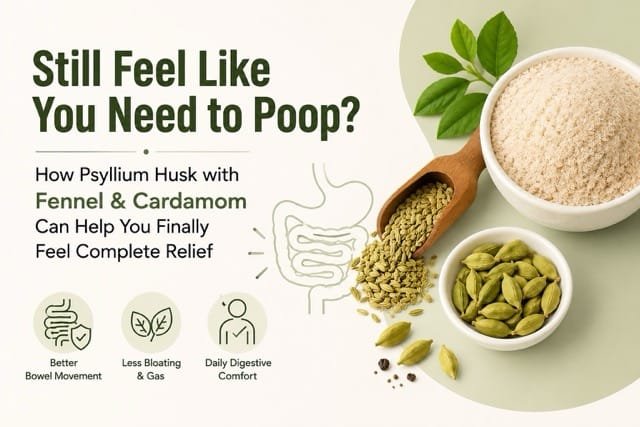
Natural remedies are abundant online, but very few are supported by high-quality clinical evidence. Psyllium husk is an exception. It is among the most extensively studied dietary fibers for improving bowel regularity, and it is recommended in clinical guidelines for chronic constipation.
Fennel and cardamom have been used traditionally for centuries as digestive herbs. While the evidence base is smaller than that for psyllium, modern studies suggest they may help reduce bloating, abdominal discomfort, and intestinal spasms—symptoms that often accompany incomplete bowel emptying.
It is important to understand that these ingredients work through different mechanisms, making them potentially complementary rather than redundant.
Psyllium Husk: One of the Best-Studied Fibers for Constipation
Psyllium is a soluble, gel-forming fiber derived from the husk of Plantago ovata seeds. Unlike stimulant laxatives, it works by absorbing water, increasing stool bulk, and improving stool consistency.
Clinical studies have shown that psyllium can:
- Increase stool frequency
- Improve stool softness
- Reduce straining
- Promote more complete bowel movements
- Improve overall bowel satisfaction in people with chronic constipation
Because it acts gradually and physiologically, psyllium is generally preferred over stimulant laxatives for long-term use in many patients.
Can Psyllium Help IBS with Constipation (IBS-C)?
IBS-C is one of the most common causes of incomplete evacuation.
Patients often experience:
- Constipation
- Abdominal pain
- Bloating
- Excessive gas
- Feeling that stool remains in the rectum
Among fiber supplements, psyllium has the strongest evidence for IBS-C because it improves stool consistency without causing the excessive fermentation associated with some other fibers.
However, it is not a cure. IBS is a complex disorder involving altered gut-brain communication, visceral hypersensitivity, and changes in gut motility. Management often includes dietary modifications, stress reduction, physical activity, and, in some cases, medication.
The Gut Microbiome Connection
Your digestive tract is home to trillions of microorganisms collectively known as the gut microbiome. These bacteria influence digestion, immune function, and even communication between the gut and the brain.
Psyllium serves as a substrate for beneficial bacteria. As they ferment part of the fiber, they produce short-chain fatty acids (SCFAs) such as:
- Butyrate
- Acetate
- Propionate
These compounds help:
- Nourish the cells lining the colon
- Support the intestinal barrier
- Regulate inflammation
- Promote healthy bowel function
A healthier microbiome may contribute to better stool consistency and more comfortable bowel movements over time.
Why Fennel May Improve Digestive Comfort
Fennel (Foeniculum vulgare) has long been used after meals in many cultures to aid digestion.
Modern research suggests fennel may:
- Relax intestinal smooth muscle
- Reduce gas retention
- Decrease abdominal bloating
- Ease intestinal cramping
Its essential oil contains anethole, a compound believed to contribute to these effects.
For people whose sensation of incomplete evacuation is worsened by bloating or intestinal spasms, fennel may offer symptomatic relief as part of an overall dietary strategy.
Cardamom: More Than a Flavorful Spice
Cardamom (Elettaria cardamomum) contains aromatic compounds such as cineole and terpinyl acetate, which have demonstrated antioxidant and digestive properties in laboratory studies.
Traditional medicine has used cardamom to relieve:
- Indigestion
- Stomach heaviness
- Nausea
- Flatulence
Although robust human clinical trials remain limited, its long history of culinary and medicinal use, combined with emerging evidence, supports its role as a complementary digestive herb.

- 🌿 Natural Fiber Blend: Made with 80% premium psyllium husk, 15% fennel seeds, and 5% cardamom — a traditional herbal mix…
- ✨ Gentle Gut Support: Helps maintain a clean and balanced digestive system with natural soluble fiber. Fennel and cardam…
- 💧 Easy to Use: Mix 1 tablespoon in water, juice, or smoothie. Stir and drink promptly before it thickens. Ideal for dail…
Why This Combination Works Better Than Fiber Alone
Many digestive supplements contain only fiber. While fiber is essential, digestive symptoms often have multiple contributing factors.
Consider someone with constipation:
- Hard stool delays evacuation.
- Gas causes abdominal pressure.
- Intestinal spasms make bowel movements uncomfortable.
- Post-meal heaviness reduces appetite for fiber-rich foods.
A combination of psyllium, fennel, and cardamom targets several of these issues simultaneously:
| Symptom | Psyllium | Fennel | Cardamom |
|---|---|---|---|
| Hard stools | ✔ | ||
| Low stool bulk | ✔ | ||
| Straining | ✔ | ||
| Gas | ✔ | ✔ | |
| Bloating | ✔ | ✔ | |
| Intestinal cramps | ✔ | ||
| Post-meal heaviness | ✔ | ||
| Digestive comfort | ✔ | ✔ | ✔ |
This complementary approach may improve overall digestive well-being, though individual responses vary.
Could This Combination Help Hemorrhoids?
Chronic straining is one of the major contributors to hemorrhoids.
When stools are hard and difficult to pass:
- Pressure inside the rectum increases.
- Hemorrhoidal veins enlarge.
- Bleeding may occur.
- Pain worsens.
By softening stool and reducing the need for excessive straining, psyllium may help lower mechanical stress during bowel movements.
However, hemorrhoids may also require topical treatments, office-based procedures, or surgery depending on severity.
Can It Help Anal Fissures?
Anal fissures often develop after passing large, hard stools.
The key to healing is preventing repeated trauma.
Soft, well-formed stools are less likely to reopen a healing fissure.
Psyllium is commonly recommended as part of conservative management because it promotes smoother bowel movements. Fennel and cardamom may enhance comfort by reducing bloating and cramping, though they do not directly heal fissures.
How to Take Psyllium Husk with Fennel and Cardamom
Although products vary, a common approach is:
- Psyllium husk: Follow the manufacturer’s directions (often around 5–10 g per serving).
- Fennel: Small culinary amounts or standardized products as directed.
- Cardamom: Culinary amounts or standardized products as directed.
Tips for best results
- Mix psyllium thoroughly with water.
- Drink it immediately before it thickens.
- Follow with an additional glass of water.
- Increase fiber intake gradually over one to two weeks.
- Stay well hydrated throughout the day.
Common Mistakes People Make
Not Drinking Enough Water
Without adequate fluids, psyllium can become difficult to swallow and may worsen constipation.
Increasing Fiber Too Quickly
A sudden increase can cause temporary bloating or gas.
Taking It with Medications
Psyllium can reduce the absorption of some medications. Take prescription medicines at least 2 hours before or after psyllium unless your healthcare professional advises otherwise.
Expecting Overnight Results
Unlike stimulant laxatives, psyllium often requires several days of consistent use before full benefits are noticed.
Who Should Avoid Psyllium?
Psyllium is not appropriate for everyone.
Avoid or seek medical advice before use if you have:
- Difficulty swallowing
- Esophageal narrowing
- Known bowel obstruction
- Fecal impaction
- Severe abdominal pain of unknown cause
- Sudden unexplained changes in bowel habits
- Allergy to psyllium
People with diabetes, kidney disease, or those taking multiple medications should discuss regular use with their healthcare provider.
Possible Side Effects
Most side effects are mild and improve as the body adapts.
They include:
- Temporary bloating
- Increased gas
- Mild abdominal fullness
Rare but serious reactions include:
- Allergic reactions
- Difficulty swallowing if taken without enough water
- Choking
- Intestinal blockage in susceptible individuals
Always consume psyllium with plenty of liquid.
Lifestyle Habits That Improve Results
Supplements work best when combined with healthy habits.
Eat More Natural Fiber
Include:
- Vegetables
- Fruits
- Whole grains
- Beans
- Lentils
- Oats
Stay Hydrated
Aim for adequate fluid intake unless restricted for medical reasons.
Walk Every Day
Physical activity stimulates bowel motility and reduces constipation risk.
Respond to the Urge
Ignoring the urge to have a bowel movement can make constipation worse.
Use Proper Toilet Positioning
Placing your feet on a small stool to elevate the knees above the hips can help straighten the anorectal angle and make bowel movements easier.
Frequently Asked Questions
How long does psyllium take to work?
Many people notice improvement within 24–72 hours, although optimal results may take one to two weeks of regular use.
Can I take psyllium every day?
For many healthy adults, daily use is appropriate when taken with sufficient fluids. Long-term use should be discussed with a healthcare professional, particularly if symptoms persist.
Does psyllium cause dependence?
No. Psyllium is not a stimulant laxative and does not generally cause dependence.
Can this combination replace laxatives?
Not necessarily. It may reduce the need for laxatives in some individuals with mild constipation, but treatment should be individualized based on the underlying cause.
Is it safe during pregnancy?
Constipation is common during pregnancy, and psyllium is often considered a suitable fiber supplement. However, pregnant individuals should consult their obstetrician before starting any new supplement. Fennel supplements should also be discussed with a healthcare professional, as safety data for concentrated herbal preparations are limited.
Does it help with bloating?
It may. Fennel and cardamom are traditionally used to relieve gas and bloating, while gradual introduction of psyllium may improve bowel function. Some people experience temporary bloating when first increasing fiber intake.
Can children use psyllium?
Only under the guidance of a pediatrician, with dosing appropriate for age and adequate hydration.
When You Should Not Ignore Incomplete Bowel Emptying
Seek medical evaluation promptly if you experience:
- Blood in the stool
- Black, tarry stools
- Unintentional weight loss
- Persistent abdominal pain
- Fever
- Vomiting
- Iron-deficiency anemia
- Symptoms lasting several weeks despite lifestyle measures
- A family history of colorectal cancer or inflammatory bowel disease
These symptoms require professional assessment and should not be managed with supplements alone.
Final Thoughts
Feeling as though you have not completely emptied your bowels can be distressing, but in many cases it reflects functional digestive issues rather than a serious disease. Addressing stool consistency, hydration, bowel habits, and digestive comfort can make a meaningful difference.
Among natural options, psyllium husk stands out because it is supported by strong clinical evidence for improving stool consistency and bowel regularity. When paired with fennel and cardamom, it may also help reduce bloating, gas, and digestive discomfort through complementary mechanisms.
That said, no supplement can replace a proper medical evaluation when alarm symptoms are present. Persistent or worsening bowel symptoms deserve timely assessment to rule out conditions such as colorectal cancer, inflammatory bowel disease, or pelvic floor dysfunction.
When used appropriately, alongside a balanced diet, adequate hydration, regular physical activity, and healthy bowel habits, this combination can be a valuable part of a comprehensive digestive wellness plan.


References (selected)
- American Gastroenterological Association. Clinical Practice Guidelines for Chronic Idiopathic Constipation.
- American College of Gastroenterology. Clinical Guideline: Management of Irritable Bowel Syndrome.
- McRorie JW Jr. Evidence-Based Approach to Fiber Supplements and Clinically Meaningful Health Benefits. Nutrition Today.
- Suares NC, Ford AC. Systematic Review: The Effects of Fibre in the Management of Chronic Idiopathic Constipation. Aliment Pharmacol Ther.
- World Gastroenterology Organisation. Global Guidelines on Constipation.
- National Institute of Diabetes and Digestive and Kidney Diseases (NIDDK). Constipation and Digestive Health Resources.