 Dr. Ahmed Farhan

If you’ve heard of Ozempic, Wegovy, or Zepbound, you probably think of them as weight loss drugs. That’s fair — they were designed to help the body manage hunger and blood sugar, and weight loss is often the most visible result.
But new research from 2026 is showing something bigger. These drugs, and newer ones still being tested, may be doing real work inside the liver, the heart, the kidneys, and even the airway while you sleep.
That matters because the number on the scale was never the whole story. Where your body stores extra fat, and how it affects your organs, has a lot to do with your long-term health. New studies are starting to show that these drugs may target that hidden fat directly — not just shrink your overall size.
Why This Is Trending Now
In June 2026, thousands of doctors and researchers gathered in New Orleans for the American Diabetes Association’s yearly Scientific Sessions.
Several major studies were presented there, and two of the biggest were about a new drug called survodutide, which is still being tested and is not yet approved for public use.
Around the same time, tirzepatide (sold as Zepbound) picked up an approval specifically for sleep apnea, and a pill form of semaglutide (Ozempic’s active ingredient) was approved to lower heart risks in people with type 2 diabetes.
Put together, these updates are shifting how doctors and researchers talk about this entire category of medication.
Instead of asking only “how much weight did people lose,” the conversation is now asking “what did that weight loss actually do inside the body?”
What the Latest Research Says
Let’s start with the newest and most talked-about study. Survodutide is an experimental drug that works on two hormone systems at once — the same GLP-1 system that Ozempic and Wegovy use, plus a second hormone system called glucagon.
Researchers tested it in two large studies, called SYNCHRONIZE-1 and SYNCHRONIZE-MASLD, and the results were published in two of the most respected medical journals in the world, The New England Journal of Medicine and Nature Medicine.
One of those studies focused on people with a condition called MASLD, short for metabolic dysfunction-associated steatotic liver disease.
In plain terms, that’s a fatty liver — extra fat has built up inside the liver itself, which can lead to swelling and scarring over time if it isn’t addressed.
MASLD is extremely common in people with obesity, but most people don’t know they have it because it usually causes no symptoms until it’s advanced.
What Researchers Actually Found
In the trial focused on obesity without diabetes (SYNCHRONIZE-1), people taking survodutide lost up to 16.6% of their body weight over 76 weeks, compared to about 3.2% for people taking a placebo (a fake treatment used for comparison).
That part sounds similar to other GLP-1 drugs. What stood out was a closer look at where the fat was coming from.
Using detailed body scans, researchers found that visceral fat — the fat that wraps around organs deep in the belly, which is riskier than fat just under the skin — dropped by up to 34%. Fat stored inside the liver dropped by up to 63%.
The second study looked specifically at people who already had fatty liver disease with signs of inflammation or scarring.
After 48 weeks on survodutide, up to 84% of people had at least a 30% drop in liver fat, compared to about 24% of people on placebo.
Even more striking: 61% of people on survodutide got their liver fat back down to a normal level, compared to under 6% on placebo.
Doctors involved in the trial said a liver fat drop this large is linked to real improvement in liver inflammation and scarring, not just a number on a scan.
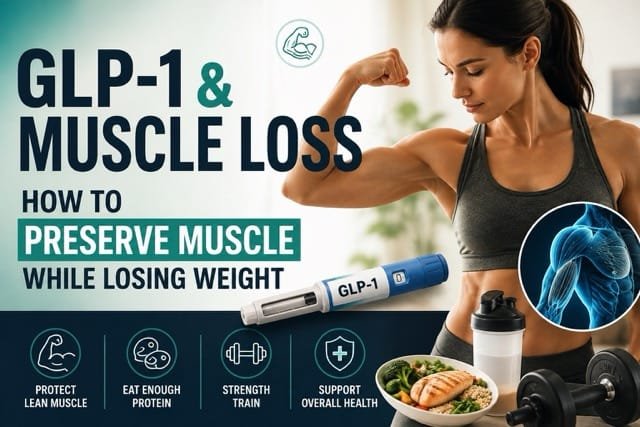
One more detail matters for anyone worried about muscle loss on these drugs: in the body scan sub-study, muscle tissue made up no more than about 11% of the total tissue lost.
Most of what came off was fat, not muscle — though some muscle loss did still happen, which is worth knowing about.
Survodutide isn’t the only story here. Drugs already on the market are picking up new, evidence-backed uses too.
Tirzepatide (Zepbound) is now specifically approved for moderate-to-severe obstructive sleep apnea in adults with obesity, based on a trial where nearly half of participants saw their sleep apnea symptoms go away.
Semaglutide already carries approvals for reducing cardiovascular risk and for slowing chronic kidney disease in certain patients, and an oral (pill) version was approved in 2026 to lower the risk of heart attack and stroke in adults with type 2 diabetes.
Separately, researchers at the same 2026 conference presented early data on GLP-1 drugs easing osteoarthritis symptoms, a joint condition that’s more common and more painful at higher body weights.
What It Means for Your Metabolic Health
For a long time, obesity treatment was measured almost entirely by pounds lost. This research suggests that’s an incomplete way to think about it.
Fat stored around your organs and inside your liver appears to behave differently — and matter differently for your health — than fat stored elsewhere.
A drug that reduces organ fat by more than it reduces total body weight percentage may be doing something more targeted than the scale alone can show.
This lines up with something doctors have suspected for years: two people can weigh the same amount and carry very different amounts of risk, depending on where their fat is stored.
These findings are some of the clearest evidence yet that certain treatments may address that hidden risk directly.
Practical Implications
If you’re already taking a GLP-1 medication, this research doesn’t change what you should do day to day — but it may be worth a conversation with your doctor about whether you should be screened for fatty liver disease, sleep apnea, or other conditions these drugs are now shown to help with.
If you have obesity along with one of these conditions, it may be relevant to how your treatment plan is built.
If you’re considering starting a GLP-1 medication, this research is a reason to ask your doctor a broader question than “will this help me lose weight.” Ask what it might mean for your liver, your heart, your kidneys, or your sleep, based on your own health history.
What We Know
- GLP-1 and related drugs already have FDA-approved uses beyond weight loss, including cardiovascular risk reduction, chronic kidney disease, and sleep apnea, backed by large published trials.
- Survodutide’s phase 3 results for fatty liver disease and targeted fat loss are strong and were published in top-tier peer-reviewed journals, but the drug is still investigational and not yet approved for regular use as of August 2026.
- Body composition scans show these drugs can reduce visceral and liver fat by a larger percentage than they reduce total body weight — a genuinely new and well-supported finding.
What We Don’t Know
- When, or if, survodutide will be approved for public use, and what it will eventually cost or how accessible it will be.
- The long-term effects of muscle loss on these medications, especially in older adults, and the best way to prevent it.
- Whether these organ-fat benefits will hold up the same way across different ages, body types, and ethnic groups, since trial populations are still relatively limited.
Common Misconceptions
“These are just weight loss drugs.” Not anymore, at least not for several of them. Some now carry official approvals for heart, kidney, and sleep-related conditions, separate from their weight-loss approval.
“If I lose the same amount of weight another way, I’ll get the same organ benefits.” That’s not established. These findings are specific to the drugs studied and their mechanism — they aren’t proof that any weight loss method produces the same organ-level changes.
“If it’s not FDA-approved yet, it isn’t real medicine.” Phase 3 results published in major peer-reviewed journals are strong scientific evidence, even before a drug reaches pharmacy shelves. But it’s also not the same as an approved, available treatment — both things can be true at once.
Who Should Pay Closest Attention
This research is most relevant if you have obesity along with any of the following: a fatty liver diagnosis or unexplained abnormal liver tests, type 2 diabetes with heart or kidney risk factors, obstructive sleep apnea, or a history of heart failure symptoms like shortness of breath and swelling.
If none of that applies to you, the research is still interesting, but less likely to change your personal treatment conversation right now.
Practical, Evidence-Based Steps
- If you have obesity, ask your doctor whether you should be screened for fatty liver disease — it often has no symptoms and is commonly missed.
- If you’re on a GLP-1 medication, talk to your doctor about adding resistance exercise, since preserving muscle appears to matter on these drugs.
- Don’t start, stop, or change the dose of any medication based on this article — these are decisions to make with your own doctor, based on your own health history.
- If you have sleep apnea symptoms — loud snoring, gasping at night, daytime exhaustion — mention them to your doctor even if weight loss isn’t your main goal.
Frequently Asked Questions
1. What is survodutide, and can I get a prescription for it?
It’s an experimental drug that acts on two hormone systems involved in hunger and fat storage. As of August 2026, it has not been approved for regular use — it’s still going through the clinical trial and regulatory review process.
2. Do these extra benefits happen without weight loss?
No. In these studies, the organ-level benefits happened alongside weight loss, not instead of it. What’s notable is that the organ fat changes were often larger, proportionally, than the overall weight change.
3. Will I lose muscle if I take one of these drugs?
Some muscle loss is possible alongside fat loss, as with most methods of significant weight loss. In the survodutide body-scan study, muscle made up a minority of the total tissue lost, but it wasn’t zero. Talking to your doctor about strength training while on these medications is a reasonable step.
4. Are GLP-1 drugs already approved for problems besides weight and blood sugar?
Yes, for some of them. Depending on the specific drug, current approvals include reducing cardiovascular risk, slowing chronic kidney disease, and treating moderate-to-severe obstructive sleep apnea in people with obesity.
5. Should everyone with obesity go on a GLP-1 drug because of this research?
No. This is an individual medical decision that depends on your health history, other conditions, and your own doctor’s judgment. This article is meant to inform that conversation, not replace it.
Conclusion
The story around GLP-1 drugs has mostly been told in pounds and percentages. New research from 2026 is adding a different chapter — one about the liver, the heart, the kidneys, and the airway.
Some of that story is already backed by approved treatments and large published trials. Some of it, like survodutide’s early results, is still working its way through the process that turns promising data into an available medicine.
Either way, the bigger picture is becoming clear: for many people, these medications may be doing more under the surface than the scale alone can show.
References
Boehringer Ingelheim. Positive data from two Phase III SYNCHRONIZE obesity trials, presented at ADA 2026 Scientific Sessions; results published simultaneously in The New England Journal of Medicine and Nature Medicine (June 2026).
Kaplan L, et al. Survodutide in adults with obesity and metabolic dysfunction-associated steatotic liver disease: SYNCHRONIZE-MASLD, a randomized, double-blind, placebo-controlled phase 3 trial. Nature Medicine (2026).
American Journal of Managed Care. Survodutide Normalizes Liver Fat in 61% of Patients With MASLD in Phase 3 Trial (2026).
American Journal of Managed Care. Weight Loss Drug Tirzepatide Now Approved for Sleep Apnea in Adults With Obesity, citing SURMOUNT-OSA trial results, New England Journal of Medicine.
Pharmacy Times. Oral Semaglutide Approved to Reduce the Risk of Cardiovascular Events, citing the SOUL trial (2026).
American Journal of Managed Care. GLP-1 Therapies in 2026: Beyond Blood Sugar and the Scale — coverage of the ADA 2026 Scientific Sessions symposium on GLP-1 receptor agonists.
Affinity Whole Health. GLP-1 Benefits Beyond Weight Loss: 2026 Research — summary of kidney, heart failure, and sleep apnea data across semaglutide and tirzepatide trials (2026).