 Dr. Ahmed
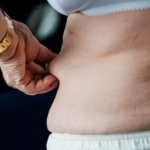
You might have looked into the mirror and faced the horrors of a growing waistline and thought of it as nothing more than a cosmetic problem.
However, that belly fat is actually an alarm bell from your body. This is among the first signs of diabetic fatty liver, a condition where our liver starts storing fat instead of processing it.
Since the liver does not have pain receptors, this ‘silent’ condition can damage your health for years without ever showing a sign.
Medically known as MAFLD (Metabolic Associated Fatty Liver Disease), this condition means your liver is struggling to handle the sugars and fats in your blood.
Understanding that your belly fat is a sign of an unhealthy liver is the first step towards fixing your metabolism and preventing long-term damage.
The Vicious Cycle: The Insulin-fat Loop
This loop is the reason why belly fat is so hard to lose, and it involves your blood sugar, your liver, and your fat cells working against each other.
● Step 1: Insulin Resistance
Insulin is the hormone that helps in the uptake of sugar in your cells from the bloodstream. During insulin resistance (seen in obesity and diabetes), glucose is unable to get inside the cells and be used for energy.
In this case, your body reacts by producing extra insulin to force sugar into cells. However, this excess insulin signals the body to store fat rather than burn it [ref].
| How to Check Insulin Resistance? |
| Calculate HOMA-IR (Homeostatic Model Assessment of Insulin Resistance), using fasting glucose and fasting insulin levels taken after an 8–12 hour fast. A raised HOMA-IR often identifies metabolic risk even when blood sugar levels are still “normal,” allowing early intervention to reverse fatty liver and improve insulin sensitivity. |
📌 HOMA-IR Formula & Reference Ranges
| Parameter | Details |
|---|---|
| HOMA-IR Formula | (Fasting Insulin µIU/mL × Fasting Glucose mg/dL) ÷ 405 |
| Test Requirement | 8–12 hours fasting blood sample |
HOMA-IR Interpretation Table
| HOMA-IR Value | Clinical Interpretation |
|---|---|
| < 1.5 | Insulin sensitive (normal) |
| 1.5 – 2.5 | Early insulin resistance |
| > 2.5 | Significant insulin resistance |
| > 3.5 | Common in type 2 diabetes & fatty liver disease |
Note: Cut-off values may vary slightly depending on laboratory methods and population characteristics.
● Step 2: Hepatic Fat Accumulation
Unfortunately, that sugar is still swimming in the blood, so your liver tries to come to the rescue. It takes that extra sugar and turns it into liquid fat through a process called De Novo Lipogenesis.
Instead of shipping that fat out to be used for energy, the overworked liver starts storing it inside its own tissues. This is how a “fatty liver” begins.
How Hepatic (Liver) Fat Is Measured
Common methods used in clinical practice:
- Abdominal Ultrasound
- First-line, widely available screening test
- Detects moderate to severe fatty liver
- Limited sensitivity for early or mild fat accumulation
- FibroScan (CAP Score)
- Non-invasive bedside test
- Estimates liver fat and liver stiffness (fibrosis)
- Useful for follow-up and risk stratification
- MRI-PDFF (Proton Density Fat Fraction)
- Gold standard for accurate liver fat quantification
- Detects even mild hepatic steatosis
- Mainly used in research or specialized centers
- Blood Tests (Indirect Assessment)
- Includes ALT, AST, triglycerides, and insulin resistance markers
- Cannot measure liver fat directly
- Helpful for assessing metabolic risk and inflammation
Comparison of Liver Fat Assessment Methods
| Method | What It Measures | Accuracy | Best Use |
|---|---|---|---|
| Ultrasound | Liver fat (visual) | Moderate | Initial screening |
| FibroScan (CAP) | Fat + fibrosis | Good | Monitoring & risk assessment |
| MRI-PDFF | Exact liver fat % | Excellent | Precise diagnosis |
| Blood tests | Metabolic risk | Indirect | Supportive evaluation |
● Step 3: The Obesity Link
Eventually, the liver runs out of storage space. This extra fat spills into your abdomen and creates the hard belly fat you can see and feel (visceral fat).
This fat is not just sitting there, as it acts like a chemical factory, releasing inflammatory signals. These chemicals travel back to your cells and make them even more resistant to insulin.
Your belly fat causes insulin resistance, which then causes fatty liver, which will go back to causing insulin resistance.
Why is this “Belly Fat” Different
When we talk about weight gain, we usually focus on the fat we can see in the mirror. However, not all fat is the same.
To understand diabetic fatty liver, you need to know the difference between the fat you can “pinch” and the fat that “protrudes.”
● Subcutaneous fat (the “pinchable” fat): This is the soft fat located just under your skin. You can feel it on your arms, thighs, or belly.
● Visceral fat (the “hidden” danger): This fat is stored deep inside your abdominal cavity, wrapping around your liver, pancreas, and intestines.
How Fatty Liver Drives the “Protruding” Look
A fatty liver does not just store fat as it actually changes the shape of your midsection. Because the liver is located in the upper right side of your abdomen, as it becomes congested with fat and starts to swell (a condition called hepatomegaly), it physically takes up more space.
Furthermore, because visceral fat is “metabolically active,” it acts like an organ of its own, pumping out inflammatory chemicals.
These chemicals cause your gut to bloat and your abdominal wall to push outward. This is why many people with diabetic fatty liver have a “hard” belly that feels tight.
Symptoms of Fatty Liver and Red Flags
Your body does leave clues that your liver is struggling to manage fat and insulin. If you notice these red flags, it is a sign that your metabolic health needs attention.
| Symptom / Red flag | What it feels or looks like | Why it happens |
| Chronic fatigue | Feeling “wiped out” or exhausted even after a full night’s sleep; a mental “fog” that doesn’t go away. | When the liver is clogged with fat, it can not store and release energy efficiently, leaving your body running on low fuel. |
| Acanthosis nigricans | Dark, velvety patches of skin are found in body folds, most commonly on the back of the neck, armpits, or groin. | High insulin levels cause skin cells to grow faster than normal. These extra cells contain more pigment, making the skin look dark or “dirty.” |
| Elevated liver enzymes | High levels of ALT or AST appear on a standard blood test from your doctor. | When liver cells are damaged or inflamed by fat, they leak these enzymes into your bloodstream like a “leaking pipe.” |
| Increased waist size | A waist circumference over 40 inches for men or 35 inches for women. | This is a direct indicator of visceral fat, the dangerous fat wrapped around your liver and other internal organs. |
The Treatment Protocol: Reversing the Damage
The good news is that the liver is one of the most resilient organs in the human body. Unlike many other conditions, fatty liver is often reversible.
A. Nutritional intervention
The goal is to lower insulin levels so the liver can finally burn its stored fat.
● Focus on removing refined carbohydrates like white bread, sugary cereals, and sodas. When you lower these, your insulin levels drop, which acts as a “green light” for your liver to start releasing fat.
● Not all fats are bad. Replace inflammatory seed oils (like soybean or corn oil) with omega-3-rich foods like salmon, sardines, walnuts, and chia seeds. These will help in reducing liver inflammation.
● Fiber is your liver’s best friend. It can eliminate excess bile and toxins, so the liver does not have to reprocess them.
B. Exercise:
Exercise for fatty liver is not just about burning calories, as it is about changing how your body handles fuel.
● Lifting weights or using bodyweight exercises builds muscle. Muscle acts as a “glucose sink,” soaking up extra sugar from your blood so it never reaches the liver to be turned into fat.
● Perform steady and light exercise (like a brisk walk where you can still hold a conversation).
C. Supplementation & Support
Always consult with your healthcare provider before starting new supplements.
● Vitamin E & milk thistle:
Studies suggest that Vitamin E can help reduce liver inflammation, while Milk Thistle is a traditional herb used to support liver cell repair [ref].
● Intermittent fasting:
By giving your body long breaks between meals (such as a 16:8 schedule), you trigger autophagy. This is a process where the body breaks down old or damaged proteins and fats within the liver.
Read: Berberine for Fatty Liver Disease and NASH
| Rezdiffra® (Resmetirom): The Only FDA-Approved Treatment for Fatty Liver Disease |
| Rezdiffra® (resmetirom) is the only FDA-approved medication specifically for fatty liver disease, approved for adults with non-cirrhotic MASH/NASH and moderate to advanced fibrosis. It works by activating thyroid hormone receptor-β in the liver, helping reduce liver fat, inflammation, and disease progression. Rezdiffra is used under specialist supervision and alongside lifestyle and metabolic risk management. |
| Eligibility Criteria for Rezdiffra® Patients may be considered if they meet all of the following: 1. Confirmed diagnosis of MASH/NASH 2. Non-cirrhotic liver disease 3. Fibrosis stage F2 or F3 (by biopsy or validated non-invasive testing) 4. Adults (≥18 years) 5. Managed by a hepatologist or experienced physician 6. No decompensated liver disease or advanced cirrhosis Note: Eligibility is individualized, and baseline labs plus ongoing monitoring are required. |
Conclusion:
It is important to remember that you cannot expect exercise to cure a fatty liver. No amount of sit-ups will target the visceral fat wrapped around your organs. Instead, you have to eat healthy by choosing foods that keep your insulin low and your liver happy.

- 97% Pure Berberine Powder – High-purity, plant-derived extract with a rich yellow color. Carefully processed and lab-tes…
- Naturally Bitter Taste – Berberine has a strong, naturally bitter flavor. Best enjoyed when mixed with smoothies, tea, c…
- 100g in Resealable Foil Pouch – Packaged in a premium aluminum pouch to protect from moisture and light, keeping the pow…


- 5 Delicious Flavors: Freeze-Dried Mango, Freeze-Dried Blueberry, Freeze-Dried Orange, Freeze-Dried Dragon Fruit & Freeze…
- Pure and Natural Ingredients: Our fruit powders are made without synthetic pesticides, GMOs, or harmful chemicals. Each …
- Health Benefits: Our carefully selected fruits are packed with antioxidants, vitamins, fiber, and digestive enzymes to s…

- 🌿 4 Tangy Citrus Flavors in One Pack: Enjoy a delicious variety of Orange, Lime, Lemon, and Kiwi powder – 5 sachets of e…
- 💧Easy to Mix & Refreshing: Just add to water, smoothies, sparkling drinks, or tea for a vibrant citrus kick. Dissolves i…
- 🛡️Rich in Vitamin C & Antioxidants: Made from real fruit powders, this mix offers a natural source of vitamin C to suppo…

- VARIETY PACK – Includes 5 delicious organic berry powder flavors: Freeze-Dried Goji Berry, Freeze-Dried Strawberry, Free…
- PURE INGREDIENTS – Made with 100% natural, freeze-dried berries and absolutely no added sugar, artificial ingredients, o…
- CONVENIENT PACKAGING – Contains 20 pre-portioned 5g packets (100g total), eliminating the need for measuring and ensurin…