
 Dr. Ahmed Farhan
Written By Dr. Hira Zaidi, MSc Clinical Nutrition

Your Gut Already Makes Its Own Weight-Loss Hormone
Here’s something most people don’t realize: the same hormone driving the Ozempic and Wegovy boom isn’t foreign to your body at all. It’s already inside you, produced every single time you eat.
That hormone is GLP-1 (Glucagon-Like Peptide-1) — and understanding how it works is the missing piece for anyone who’s ever wondered why blood sugar crashes hit hard, why “just eat less” advice fails, or why hunger seems to have a mind of its own. The issue often isn’t willpower. It’s signaling.
Prescription GLP-1 receptor agonists flood your system with pharmaceutical-grade doses of this hormone. But your gut has been quietly manufacturing a natural version of it for your entire life. The real question — the one this article answers — is whether you can train your body to release more of it, more consistently, through food and daily habits.
The answer is yes. Not to prescription-drug levels, but enough to make a meaningful difference in appetite, blood sugar stability, and how satisfied you feel after eating.
What Is GLP-1, and Why Does It Matter So Much?
GLP-1 belongs to a class of hormones called incretins. It’s produced by L-cells, specialized hormone-secreting cells lining your small intestine (specifically the ileum) and colon.
When food travels through your digestive tract, these L-cells detect incoming nutrients and release GLP-1 directly into your bloodstream. From there, it performs three critical jobs:
1. It Slows Gastric Emptying
GLP-1 puts the brakes on how quickly food leaves your stomach. The result: you stay physically full for longer, and the sharp post-meal blood sugar spike gets blunted.
2. It Talks Directly to Your Brain
GLP-1 crosses into the brain’s appetite-regulation centers and delivers a clear message: enough food has arrived, stop eating. This is the exact mechanism pharmaceutical GLP-1 drugs exploit — they’re simply amplifying a signal your body already sends.
3. It Regulates Blood Sugar From Both Sides
When glucose rises after a meal, GLP-1 prompts the pancreas to release insulin (clearing sugar from the blood) while suppressing glucagon (the hormone that tells your liver to dump more sugar in). It’s a two-way brake on blood sugar swings.
One catch: natural GLP-1 has a short half-life. An enzyme called DPP-4 breaks it down within minutes. That’s precisely why consistent stimulation — through the right foods and eating patterns — matters more than any single “superfood.”
The GLP-1 Food List: What to Eat to Support Natural Release
You don’t need exotic supplements. You need to consistently hit the nutrient sensors that trigger your L-cells. Here’s how to build a plate that works with your gut biology instead of against it.
1. High-Protein Foods
Protein is one of the strongest known triggers for GLP-1 release. As it breaks down into amino acids, it activates gut receptors that signal L-cells to fire.
- Lean meats & poultry: chicken breast, turkey, lean beef
- Fish & seafood: salmon, tuna, mackerel (bonus omega-3 support)
- Dairy: Greek yogurt, cottage cheese, eggs
- Plant-based: tofu, tempeh, edamame
2. Soluble & Fermentable Fiber
Fiber slows gastric emptying on its own — but its real power lies in what happens after. Gut bacteria ferment soluble fiber into short-chain fatty acids (SCFAs) like butyrate and acetate, which directly stimulate L-cells to release GLP-1.
- Whole grains: oats, barley, quinoa, brown rice
- Legumes: lentils, chickpeas, black beans, split peas
- Vegetables: artichokes, Brussels sprouts, broccoli, carrots
- Seeds: chia seeds, flaxseeds
3. Healthy Unsaturated Fats
Not all fats are equal here. Monounsaturated and omega-3 fats trigger significantly more GLP-1 secretion than saturated fats.
- Extra virgin olive oil: rich in oleic acid
- Avocados: monounsaturated fat plus soluble fiber, a double win
- Nuts: walnuts, almonds, pistachios
4. Polyphenol-Rich Foods and Spices
Polyphenols interact with your gut microbiome and L-cells in ways that enhance hormone signaling.
- Berries: blueberries, blackberries, raspberries
- Beverages: green tea, dark roast coffee
- Dark chocolate: 70%+ cacao
- Spices: turmeric (curcumin), cinnamon
5. Probiotics and Fermented Foods
A well-balanced microbiome improves how sensitive and responsive your metabolic hormones are overall.
- Fermented dairy: kefir, live-culture yogurt
- Fermented vegetables: kimchi, sauerkraut
3 Daily Habits That Amplify Your Natural GLP-1 Response
Food is half the equation. What you do around meals matters just as much.
Sequence your meal. Eat vegetables and protein first, and save starches or refined carbs for last. This order delays gastric emptying, softens blood sugar spikes, and produces a stronger, more sustained GLP-1 response than eating the same foods in reverse.
Slow down. Gut hormones like GLP-1 take roughly 15–20 minutes to peak after you start eating. Eat too fast, and you’ll finish your plate before your gut has had the chance to tell your brain you’re full.
Protect your sleep and move your body. Chronic sleep deprivation raises ghrelin (the hunger hormone) while blunting GLP-1 output. Regular aerobic and resistance training, on the other hand, improves insulin sensitivity and strengthens post-meal GLP-1 secretion.
The Bottom Line
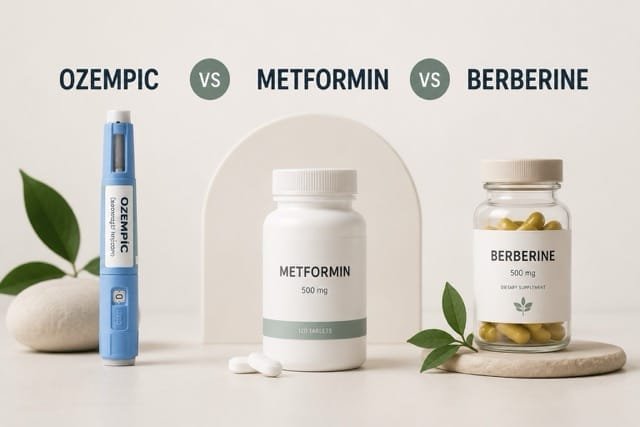
Natural food strategies won’t replicate the pharmaceutical-grade dosing of Ozempic, Wegovy, or Mounjaro — and they’re not meant to. What they offer instead is a sustainable, low-risk foundation: a way to work with your gut’s existing hormonal machinery rather than overriding it.
Build meals around lean protein, fermentable fiber, monounsaturated fats, and polyphenol-rich foods. Eat slowly, in the right order, and protect your sleep. Do that consistently, and you give your body everything it needs to regulate its own appetite and blood sugar — naturally.
This article is for general educational purposes and isn’t a substitute for personalized medical advice. Anyone managing obesity, diabetes, or metabolic conditions should talk to a physician or registered dietitian before making significant dietary changes.