
 Dr. Ahmed Farhan

More people are swapping their morning coffee for a cup of roasted barley powder. It’s caffeine-free. It has a warm, nutty, toasty flavor. And a lot of articles claim it also helps control blood sugar, because barley is high in fiber.
That claim sounds simple. But when you look closely at the actual research, the story is more interesting — and more useful — than most coffee-alternative articles let on.
The fiber that helps your blood sugar mostly lives in the solid grain, not in a cup of hot water poured over it. How you make your roasted barley drink changes whether you get that benefit at all.
Why People Are Reaching for It Now
Three trends are pushing roasted barley powder into more kitchens.
First, more people are trying to cut back on caffeine. Sleep trackers and blood sugar monitors have made people more aware of how coffee affects their sleep and energy, and caffeine-free swaps are having a moment.
Second, people taking GLP-1 medications for weight loss or diabetes often say coffee suddenly feels too strong or upsets their stomach. Many are looking for a gentler morning drink instead.
Third, roasted barley drinks have deep roots outside the U.S. Mugicha in Japan, boricha in Korea, and dàmàichá in China have been daily drinks for generations.
As more people explore food traditions from other countries online, these drinks are getting new attention in the West, often rebranded as a modern “coffee alternative.”
What the Research on Barley and Blood Sugar Actually Says
The claim that barley helps blood sugar isn’t made up. It’s based on real, solid research — just not research about drinking roasted barley “coffee.”
Barley contains a type of soluble fiber called beta-glucan. When you eat it, beta-glucan turns into a thick gel in your gut. That gel slows down how fast sugar from food gets into your bloodstream. A slower rise means a smaller, gentler blood sugar spike after you eat.
This isn’t a guess. A 2021 review pooled results from 103 separate trials on oat and barley beta-glucan. Eating enough of it lowered the blood sugar spike after a meal by about 23%, and lowered the insulin spike by about 22%.
That is considered strong, established evidence — the kind that holds up across many different studies done by different research teams.
A separate meta-analysis focused specifically on barley found the same pattern: barley beta-glucan meaningfully lowers the after-meal blood sugar spike, by an amount large enough to matter physiologically, not just statistically.
Food safety regulators agree there’s something real here. European food-safety scientists have accepted that beta-glucan from oats and barley can lower the blood sugar spike after a meal, but only above a minimum amount, and only when it’s eaten as part of the food.
Here’s the catch: almost all of this research is about eating barley — flakes in a bowl, barley baked into bread, whole grain barley cooked as a side dish. It is not research about steeping roasted barley in hot water and drinking the liquid.
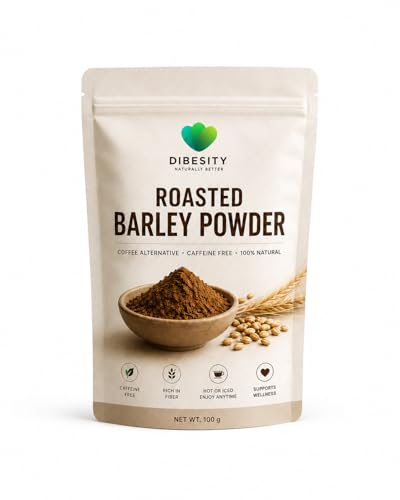
- PREMIUM COFFEE ALTERNATIVE: Enjoy a rich, smooth roasted flavor in a naturally caffeine free beverage crafted as a comfo…
- ACID FREE & GENTLE: Designed as an acid free coffee alternative instant drink with a smooth roasted profile that’s easy …
- INSTANT ROASTED BARLEY BEVERAGE: Finely milled roasted barley powder dissolves quickly in hot or cold water, milk, or pl…
What Researchers Found When They Tested the Roasted Drink Itself
This is where the story gets more interesting. A 2024 study tested this exact question: does roasting and brewing barley into tea keep the fiber and antioxidant benefits that whole barley grain has?
The researchers roasted barley grains, then brewed them into tea the normal way — steep, strain out the grain, and drink the liquid. Roasting itself didn’t destroy the fiber or beta-glucan sitting inside the grain.
But here’s the key finding: the brewed tea itself, the liquid you actually drink, was not a meaningful source of fiber or antioxidants at all. Nearly all of the fiber stayed behind in the solid grain pieces that get strained out and thrown away.
The same study found something else worth knowing. Roasting barley creates a compound called acrylamide, which forms naturally whenever starchy foods are browned or roasted at high heat — the same thing happens in roasted coffee beans, toast, and french fries.
The researchers found acrylamide doesn’t dissolve into the tea. It stays behind in the solid grain, too. So the brewed tea ended up without much acrylamide, but for the same reason it ended up without much fiber: almost nothing from the grain actually made it into the cup.
Put together, this means the popular claim — “drink roasted barley tea for the fiber and blood sugar benefits” — mixes up two different things. The blood sugar benefit comes from eating the fiber. A strained tea or coffee-style brew doesn’t deliver much of it.
What This Means for Your Blood Sugar
If your goal is steadier blood sugar, roasted barley powder can still help — but it depends on how you use it.
If you brew it like tea — steep it in hot water, then strain out the grain pieces and drink just the liquid — you’re mostly drinking flavored water. You get a caffeine-free, coffee-like drink, but not much fiber, and not the blood-sugar-smoothing effect the beta-glucan research is about.
If instead you use a very finely ground roasted barley powder and whisk or stir the whole powder directly into your cup — the way you’d make instant coffee — you drink the entire ground grain, not just a strained liquid. That keeps the fiber in your cup instead of leaving it behind in a strainer.
This distinction matters more than roast level, brand, or how “traditional” a product claims to be. If you’re picking a roasted barley powder specifically hoping for a blood sugar benefit, whether you strain it out or drink the whole powder is the detail that decides whether you get one.
Practical Implications
A few things follow directly from this:
- Check how your product is meant to be used. Some roasted barley products are sold as loose grain or tea bags meant to be steeped and strained — these work like tea. Others are sold as a fine, instant-dissolving powder meant to be whisked into hot water and drunk whole, closer to instant coffee. Read the package.
- Don’t expect it to replace whole grains in your diet. Even the whisked whole-powder version delivers barley in a much smaller amount than a bowl of barley flakes or a slice of barley bread. Treat it as a small bonus on top of your coffee swap, not a fiber source you can count on.
- Watch what’s mixed in. Instant “barley coffee” blends sometimes include added sugar, non-dairy creamer, or malt syrup to make the flavor sweeter and closer to real coffee. Those additions can undo any blood sugar benefit the barley itself might offer. Check the ingredient label, not just the front of the package.
What We Know
We know barley’s soluble fiber, beta-glucan, meaningfully lowers the blood sugar spike after eating — this is established, well-replicated evidence from many human trials.
We know roasting barley doesn’t destroy that fiber inside the grain itself. We know a strained, steeped roasted barley tea or coffee doesn’t carry much of that fiber into the cup.
And we know it’s naturally caffeine-free, and that cutting caffeine, especially later in the day, is linked to better sleep in well-designed research.
What We Don’t Know
There isn’t good human research testing roasted barley powder specifically as a coffee replacement — most studies test whole barley grain, flakes, or bread, not a “whisked whole powder” drink.
We don’t have solid evidence on exactly how much of a blood sugar benefit you’d get from a cup of whisked barley powder compared to eating the same amount of barley as food.
Claims floating around online about barley coffee improving mood, memory, or skin hydration are not backed by strong research and should be treated as unproven for now.
Common Misconceptions
“Barley coffee is basically the same as eating barley.” Not accurate — how you prepare it changes what you actually get, as the research above shows.
“Since it has fiber, you can drink as much as you want.” Even the beneficial, whisked version is a small addition to your diet, not a fiber supplement.
“It’s caffeine-free, so it’s automatically better for blood sugar than coffee.” Regular coffee has its own research suggesting modest metabolic benefits, largely from plant compounds called chlorogenic acids. Swapping isn’t automatically an upgrade — it’s a different trade-off, not a guaranteed better one.
Who Should Be Particularly Concerned
Barley contains gluten. Roasted barley powder and barley tea are not gluten-free, and anyone with celiac disease or a gluten sensitivity should avoid them, even though the drink doesn’t look or taste anything like wheat.
People managing diabetes with medication should not change their treatment based on a coffee swap. If you’re curious how switching might affect your blood sugar, talk with your doctor or a dietitian, and don’t stop or adjust any medication based on what you drink.
Anyone who currently relies on caffeine to manage a medical condition, such as certain headache disorders, should talk to a doctor before cutting caffeine abruptly. Sudden caffeine withdrawal can cause its own headaches and fatigue for a few days.
Practical, Evidence-Based Recommendations
- Look for a finely ground, whole-powder product meant to be whisked in, not a bag meant for steep-and-strain, if the fiber angle matters to you.
- Start with one cup a day in place of your usual coffee, rather than switching all at once — this eases any caffeine-withdrawal headache.
- Read the ingredient label for added sugar or creamer blends.
- Treat any blood sugar improvement as a possible small bonus, not a treatment — pair it with the basics that have the strongest evidence: regular meals, fiber from whole foods, and movement after eating.
- If you have celiac disease or gluten sensitivity, skip it. Roasted chicory root or dandelion root coffee are naturally gluten-free alternatives with a similar toasty flavor.
FAQ
Is roasted barley powder caffeine-free?
Yes. Barley naturally contains no caffeine, so roasted barley powder and barley tea are caffeine-free drinks.
Does roasted barley coffee actually lower blood sugar?
The fiber in barley can lower the blood sugar spike after eating, but this is best supported when you eat the whole grain or drink a whisked whole-powder version — not a strained, tea-style brew.
Is roasted barley powder safe for people with diabetes?
Nothing in the research suggests it’s unsafe, and its lack of caffeine and modest fiber content may be a mild plus. But it isn’t a treatment. People with diabetes should keep following their care team’s plan.
Is roasted barley powder gluten-free?
No. Barley contains gluten, so this drink is not safe for people with celiac disease or gluten sensitivity.
Does it taste like coffee?
It has a similar warm, roasted, slightly bitter, nutty flavor, but most people notice it’s sweeter and lighter-bodied than real coffee, without coffee’s acidity.
Conclusion
Roasted barley powder earns its spot as a genuine caffeine-free coffee alternative — that part of its reputation holds up.
The blood sugar claim is real too, just narrower than most articles suggest: it depends on whether the fiber inside the grain actually ends up in your cup.
Whisk in a fine, whole powder, and you’re keeping the good stuff. Steep and strain it like traditional tea, and you’re mostly drinking flavorful, caffeine-free hot water.
Either way, it’s a reasonable coffee swap — just don’t expect a strained cup of barley tea to do the same job as a bowl of barley in your diet.
References
Zurbau, A., Noronha, J.C., Khan, T.A., Sievenpiper, J.L., & Wolever, T.M.S. (2021). The effect of oat β-glucan on postprandial blood glucose and insulin responses: a systematic review and meta-analysis. European Journal of Clinical Nutrition.
Effect of barley β-glucan on postprandial glycaemic response in the healthy human population: A meta-analysis of randomized controlled trials. ScienceDirect / Journal of Cereal Science.
Effects of roasting and steeping on nutrients and physiochemical compounds in organically grown naked barley teas. PMC11043873, National Library of Medicine.
Reiners, S., Hebestreit, S., Wedekind, L., et al. (2023). Effect of a regular consumption of traditional and roasted oat and barley flakes on blood lipids and glucose metabolism – a randomized crossover trial. Frontiers in Nutrition.
Gardiner, C., Weakley, J., Burke, L.M., et al. (2023). The effect of caffeine on subsequent sleep: a systematic review and meta-analysis. Sleep Medicine Reviews.
Nascimento et al. (2026). The Effects of Caffeine on Anxiety Behavior in Healthy Individuals: A Systematic Review of the Literature. Stress and Health.
EFSA Panel on Nutrition, Novel Foods and Food Allergens. (2025). Beta-glucans from oats or barley and reduction of postprandial glycaemic responses — scientific opinion. EFSA Journal.