
 Dr. Ahmed Farhan
If you have been looking for a fiber supplement but feel confused by all the options on the shelf, you are not alone.
Psyllium, Benefiber, and Methylcellulose are three of the most popular fiber supplements in the world. But which one is right for you?
In this article, we will compare all three in very simple words so you can make the best choice for your health.
First, Why Do You Even Need a Fiber Supplement?
Most people do not eat enough fiber from their food. Fruits, vegetables, and whole grains are the best natural sources of fiber, but busy lives and processed foods make most of us fall short in our daily fiber intake.
When you do not get enough fiber, you may experience:
- Constipation or irregular bowel movements
- Bloating and gas
- High blood sugar levels
- High cholesterol
- Feeling hungry all the time
Fiber supplements help fill this gap. But not all fiber supplements work the same way. Let us look at each one carefully.
What Is Psyllium Husk?
Psyllium husk is a natural fiber that comes from the seeds of a plant called Plantago ovata, grown mostly in India and Pakistan. It has been used for hundreds of years as a natural remedy for digestion problems.
Psyllium is a soluble fiber, meaning it dissolves in water and forms a thick gel inside your gut. This gel is what makes it so powerful.
What Psyllium Is Good For:
• Relieving constipation by adding bulk to stools which makes it easier to pass
• Treating diarrhea because the gel firms up loose stools
• Lowering blood sugar by slowing down sugar absorption after meals
• Lowering bad cholesterol (LDL)
• Helping you feel full longer, which supports weight loss
Psyllium is one of the very few fiber supplements that the FDA has approved for reducing the risk of heart disease.
What Is Benefiber?
Benefiber is a brand-name product. Its main ingredient is wheat dextrin, which is a type of soluble fiber made from wheat starch.
The biggest selling point of Benefiber is that it is completely clear, tasteless, and does not thicken when you mix it in water. This makes it very easy to add to food and drinks without changing the taste or texture.
Benefiber contains wheat, so it is not suitable for people with celiac disease or gluten sensitivity.
What Benefiber Is Good For:
• General digestive health and regularity
• Feeding good gut bacteria (it works as a prebiotic)
• Easy daily use as it dissolves completely in water, coffee, or food
• Gentle enough for people with sensitive stomachs
However, Benefiber is not as strong as psyllium when it comes to relieving serious constipation, lowering cholesterol, or controlling blood sugar. It is more of a gentle, everyday fiber boost.
What Is Methylcellulose?
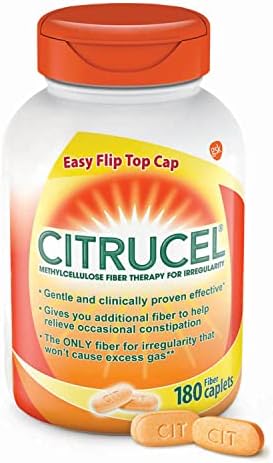
Methylcellulose is a man-made fiber. It is not found in nature; it is created in a laboratory from plant cellulose. The most well-known brand is Citrucel.
Like psyllium, methylcellulose is a soluble fiber and also forms a gel in the gut. But because it is synthetic and does not ferment in the gut, it produces very little gas.
What Methylcellulose Is Good For:
• Relieving constipation
• Very gentle on the stomach and causes much less gas and bloating than other fibers
• Good choice for people who get a lot of gas from psyllium or Benefiber
• Best option for people with IBS or very sensitive digestion.


Psyllium vs Benefiber vs Methylcellulose:
| Feature | Psyllium | Benefiber | Methylcellulose |
| Source | Natural plant(Plantago ovata seeds) | Wheat dextrin (from wheat starch) | Man-made (from plant cellulose) |
| Type of Fiber | Soluble + some insoluble | Soluble | Soluble (synthetic) |
| Thickens in Water? | Yes, quickly and significantly | No, stays completely clear | Yes, but less than psyllium |
| Taste | Mild earthy taste | Completely tasteless | Very mild taste |
| Best for Constipation | Excellent, very effective | Mild to moderate help | Good, but not as strong as psyllium |
| Best for Blood Sugar | Very effective, clinically proven | Some benefit, not as strong | Very limited benefit |
| Best for Cholesterol | Excellent, FDA-approved | Moderate benefit | Very limited benefit |
| Causes Gas/Bloating? | Can cause gas, especially at first | Mild gas in some people | Least likely — best for sensitive stomachs |
| Gluten-Free? | Yes | No, contains wheat | Yes |
| Suitable for IBS? | Works for many, but can cause gas | Excellent, FDA-approved | Best option for IBS |
Which One Should You Choose?
| Your Goal | Best Choice |
| Serious constipation that needs quick relief | Psyllium |
| Lower cholesterol naturally | Psyllium |
| Control blood sugar after meals | Psyllium |
| Lose weight and feel fuller longer | Psyllium |
| Natural, plant-based fiber with a long track record | Psyllium |
| Gentle daily fiber boost | Benefiber |
| Something tasteless that disappears in food/drinks | Benefiber |
| Sensitive stomach, cannot handle thick drinks | Benefiber |
| No gluten sensitivity, want something convenient | Benefiber |
| Lots of gas or bloating from other fibers | Methylcellulose |
| IBS or a very sensitive digestive system | Methylcellulose |
| Want help with constipation, but need it gently | Methylcellulose |
| Gluten-free option that is easy on the stomach | Methylcellulose |
Tips for Using Any Fiber Supplement Safely
No matter which fiber supplement you choose, always follow these simple rules:
Always drink plenty of water.
Every fiber supplement needs water to work properly. Drink at least one full glass when you take it, and aim for 6–8 glasses of water throughout the day.
Start with a small dose.
Your gut needs time to adjust. Start with half the recommended dose for the first week, then slowly increase. This will reduce gas and bloating.
Be consistent.
Fiber supplements work best when you take them every day at the same time. Do not take them only when you feel constipated.
Do not take fiber with medicines.
Fiber can reduce how well some medications are absorbed. Always wait at least 1–2 hours after taking any medicine before having your fiber supplement.
Talk to your doctor first if you have diabetes, heart disease, IBS, celiac disease, or any other health condition.
Can You Take More Than One at a Time?
Some people wonder if they can combine these supplements. In general, it is better to stick to one and use it consistently rather than mixing multiple fiber supplements.
Taking too much fiber at once can cause bloating, gas, and stomach cramps. If one supplement is not working well for you, switch to another rather than stacking them together.
Bottom Line:
All three, psyllium, Benefiber, and methylcellulose, are safe and effective fiber supplements. But they are not the same, and the best one for you depends on your specific needs.
If you want the most powerful, well-researched, and natural option, psyllium husk wins. It has the strongest evidence behind it for constipation, cholesterol, blood sugar, and weight management.
If you want something gentle, tasteless, and easy to use every day, then Benefiber is a great choice.
If your stomach is sensitive and gas is a big problem, Methylcellulose is your best friend.
The most important thing is to pick one, use it consistently, drink lots of water, and give it a few weeks to work. Your gut health is worth the effort!